I deleted my Twitter account today. I deleted my Facebook account early this week so I suppose it has been coming, but I didn't see it coming. I had been merrily tweeting away just minutes before, in fact.
But I have, for a number of years now, earnestly been telling everyone who listens that I think Twitter has become something of a social problem and I'm pleased that I've finally demonstrated any kind of moral backbone. If I'm completely honest, I had only been maintaining my Twitter account because I had joined the VENERABLE MICROBLOGGING™ SITE in February 2007 and as such was something of an early adopter. It made me feel like an internet wizard.
When it came to the crunch, it was all Andrea Leadsom's fault.
Earlier in the morning I'd tweeted that Andrea Leadsom is a daft moo. John Dobson, who is well worth following if you are one of the BRAINWASHED SHEEPLE still on Twitter, replied "but... she's... a mother", which if you ask me was a pretty ribald comeback.
I replied that I had not implied she wasn't my moral superior, merely stating that she was a [lots of swearwords] moo. This obviously triggered a mechanism deep within the bowels of the Twitter engine. Irregardless of the fact I had at no point tagged Andrea Leadsom (the daft moo) anywhere, nor referenced her in the specific tweet that Twitter took umbrage at, I was naughty stepped for 12 hours.
Hmm, I thought. This seems punitive, considering that earlier this week Twitter had let Leave.EU tweet a bundle of hideous racism without so much as a query. I concluded that Twitter was, finally, broken beyond repair.
Andrea Leadsom IS a daft moo. Swearing is wrong.
So, I finally gave Twitter what it has wanted from me for 12 long years - my mobile phone number - so that I could delete the offending tweet and be redeemed, welcomed back into the bosom of society once again. But! It was my cunning plan. As soon as I was back into my unlocked account, I FUCKIN' DEACTIVATED IT! Woof. Game, set and match to me.
So anyway, that's why I'm not on Twitter any more. Or Facebook. Actually, there are different reasons for my leaving Facebook which I will not trouble you with, but needless to say I was right about that, too. If my parting has caused you unimaginable grief, you can still find me here, on Instagram or you can email me using the email address you will find on this very site.
If I like you enough, maybe we'll even become WhatsApp buddies? (Yeah, right)
My only regret is that almost everyone who actually wants to be party to this information will never see it, because I can't tweet it out. Still, I figure if you're not clever enough to have found it anyway, I almost certainly didn't want to talk to you.
This is why I fear no backlash from Andrea Leadsom, who is a daft moo.

Showing posts with label Society. Show all posts
Showing posts with label Society. Show all posts
Friday, 11 October 2019

Wednesday, 30 January 2019
Get Back, outside
Speaking personally, I avoid going out wherever possible, but other people do venture forth into the wide blue and when this happens they will no doubt sometimes find themselves in attendance at live music performances. There are countless of these taking place right now all over the world, and save for the occasional unplanned pregnancy or Damascene moment of self-realisation, little or nothing about them will be remembered by history.
Of course, it is not always this way. Nothing that is possessed of the power of music could always slide by unnoticed and as a result there have been some performances so shattering, so profound and so memorable that they have – directly or otherwise – shaped the course of more or less everything that happened next. This is a fact that is particularly on my mind today, for reasons that I will get into shortly. However, I feel it would be germane at this point to first provide some examples of gigs that sent ripples far beyond their own pond, just in case any of you think that I am lying.
Case study 1: Bob Dylan is so Punk it's unbelievable 1965-1966
One of the curious and unexpected effects of the rise of technology that still threatens to end us all was the re-emergence of the folk music scene in America during the 1950s and 1960s. The apex of this movement was the Newport Folk Festival, an annual three-day analogue happening on the picturesque New England coast; THE place for all the insufferable hairshirt-wearing, hempy draft-dodgers to assemble for a coffee clatch, smoke a doobie and listen to Pete Seeger sing a scurrilous eighteen-verse song about King George II as two shirtless men chop wood at the side of the stage.
Dylan's gig there in 1964 had been greeted by the kind of fervent, rapturous response normally reserved for Jesus Christ on Palm Sunday. Perhaps mindful of what happened to the J man subsequently, the following year the prophet of all of the oakiest folkies decided that the time had come to mix things up a little. On Saturday 24th, Dylan played a three-song acoustic set at an afternoon workshop, accompanied only by his guitar, harmonica and (presumably) two blacksmiths casting pewter tankards, before making the spontaneous and momentous decision to play an electric set the following day to showcase his new material accompanied by the Paul Butterfield Blues Band.
This Sunday evening set was completely incendiary. Dylan would again play three songs, but this time his output came courtesy of RAW POWER. He clattered through this truncated set, playing into a wall of discontent and studied outrage, before leaving the stage to a cacophony of jeering and politically appropriate anger. The evening's master of ceremonies Peter Yarrow was left on the verge of tears. Neither in his role as King of the Hippies nor or as Peter from Peter, Paul and Mary had he ever had to deal with such overt and voluble hostility and Yarrow begged Dylan to return to the stage and continue his performance. This he did, unaccompanied once more, cheered to the echo by the same crowd who minutes before had been baying for his blood. An unprepared Dylan didn't have the correct mouth organ and asked the crowd whether or not anyone had an E harmonica. The subsequent volley of metal objects that hurtled towards the stage had been quite unmatched in the area since the Revolutionary War and, now musically replete, Dylan performed two more songs to placate the crowd, whom rock historians by this point may have started to suspect of being a load of reactionary idiots. Dylan wouldn't return to folk music's hallowed spot again until 2002 where, possibly still wary of reprisals from hacky sack-playing beatnik wastrels, he played his set decked out in a wig and false beard.
But it wasn't just American folk fans who had temporarily lost the Zeitgeist: it turned out that British people can be idiots as well, and idiocy without the consoling prospect of the imminent tour of duty in Vietnam is a deadly combination indeed. The following year, during a rambunctiously adversarial European tour, on 17th May 1966 (a Tuesday) Dylan played a concert at the Free Trade Hall, Manchester which would become perhaps the most notorious, bootlegged and discussed non-festival gig ever played in the United Kingdom.
Anyone who believes that trolling is a modern phenomenon that came about with the advent of online communities need only look at the set list from that night in order to see the errors in their thinking. The first half of Dylan's show, solo and accompanied only by himself on acoustic guitar and harmonica, was largely comprised of pared-down versions of his newer material, cribbed from the contentious electric era albums. When he returned for the second half it was in the company of five other musicians, four of whom were on the cusp of finding stardom in their own right as The Band. Here, Dylan played eight more numbers, this time mainly older songs from the folk era but with a thousand volts shoved right up them. The crowd grew increasingly restless, chanting, shouting and slow handclapping their way through the gaps between songs, only for Dylan and his band to beat them back into submission with another wall of noise. The whole affair culminated in the most famous heckle in rock and roll history: “Judas!”, followed by its most famous riposte: a version of Like A Rolling Stone that, as per Dylan's instruction to his group, was played “fucking loud”. Dylan would suffer a serious motorcycle accident two months later and following his recuperation would choose instead to tread a less confrontational path: country rock.

Case study 2: Otis Redding makes black all right for the all whites, 1967
The United States of America's black community had been quietly producing all the music that mattered for generations, only for the rest of the population to ignore it and then have it sold back to them by more "palatable" (i.e. white) British acts for much of the preceding decade. The 1967 Monterrey Pop Festival was when White America finally woke up to this fact and realised they could cut out the middle man and, in turn, help make America great again. The Jimi Hendrix Experience blew a few minds later that weekend (lest we forget that Hendrix himself had needed to leave America and go to the UK in order to gain any recognition as a solo artist, a fact which history has rendered completely absurd), but the standout moment was Otis Redding's set on 17th June 1967, a Saturday. Backed by the Stax Records house band Booker T and the MGs, it culminated in a screaming rendition of Try A Little Tenderness so shattering that it can, even now, still peel the skin from your face. White America, suitably chastened, would never again so wilfully close its ears en masse to the music of their black brethren. This is a considerable legacy for just an hour's work and all suitably marvelled. Unfortunately for Redding, his personal legacy would be cemented by his untimely death in an aeroplane crash just six months later.
Case study 3: James Brown saves Boston
Martin Luther King, one of the great orators and humanitarian figures of the 20th Century was assassinated on April 4th 1968 in Memphis, Tennessee. This was a Thursday and by Friday morning, many of America's inner-cities were already counting the cost of a night of protest, anger and civil disobedience. In Boston, MA, the powers that be had a bright idea: if they could get WBGH-TV to film and broadcast the James Brown show scheduled for the night of April 5th at the Boston Garden, perhaps everyone who might otherwise be keeping themselves occupied by rioting would instead be glued to their television sets.
Brown himself took some convincing: he had already signed a contract with a rival TV station for the exclusive filming of a later show in the same tour and if he allowed the Boston gig to be broadcast he would break its non-compete clause, costing him a cool $60,000. No matter: the Boston city government put their hands in their pockets and paid him the difference, in what turned out to be a particularly savvy move for all concerned. Brown's electrifying eleven song set and legendary stage show had the effect that the city council had desired. Having succumbed to riots and fires on Thursday evening, Boston remained calm that Friday night while many other major American cities continued to burn.
All of this is not to say that the whole event was without a frisson of tension, however. In fact, the whole gig was a tinderbox, but one that would be masterfully handled by the hardest working man in showbusiness. The overall effect is completely electrifying, as well as pregnant with a sense of historical significance. In the most famous point in the show, the stage was invaded by over-enthusiastic fans and Brown had to stop the concert in order to prevent the police and venue security from over-reacting in their attempts to make them stand down. Having re-established control and his authority over the situation, Brown would then turn on his audience, admonishing the crowd: “Wait a minute, wait a minute now WAIT!” Brown yelped. “Step down, now, be a gentleman….Now I asked the police to step back, because I think I can get some respect from my own people!”
Case study 4: Jimi Hendrix breaks the national anthem, 1969
As we have previously discussed, Jimi Hendrix had gone to some lengths to get some respect from his own people and at The Woodstock Festival, New York on 18th August 1969 (it was a Monday), he would crystallise his entire experience of race and of national identity down into a single unforgettable moment. With his new band, Gypsy Sun and Rainbows, Hendrix closed the 20th Century's most legendary countercultural gathering with a middling twelve-song set (beginning at the decidedly un-rock'n'roll time of 9 am) that would become infamous for a wailing three-minute long electric guitar rendition of The Star Spangled Banner. Filled with feedback, distortion and notes bent way out of shape by his Stratocaster's tremolo bar, it was viewed by many as a protest - against prevailing racial politics in the US and against its ongoing war in Vietnam - and it caused quite a stir in the United States at large, already a country notably and visibly fractured along generational lines. Hendrix himself later told talk show host Dick Cavett that he didn't consider his performance unorthodox in the least. "I thought it was beautiful". Perhaps it was. Perhaps his tongue was in his cheek. It is a moment frozen in time, whose power to move and shock and provoke is seemingly captured inside the same amber.
Case study 5: David Bowie kills an alien, 1973
Tuesday 3rd July 1973. As his alter-ego Ziggy Stardust, Bowie - a man who craved fame but who just two years previously couldn't even have gotten himself arrested - sent the entire world's youth population into spasms of uncontrollable grief with a spontaneous announcement that this would be "the last show that we ever do". That night, July 3rd 1973 (a Tuesday) Bowie - backed by Mick Ronson, Woody Woodmansey and Trevor Bolder (with additional help from Jeff Beck) - played an extensive seventeen song set, drawing on all his previous album releases as well as covers of songs by both The Velvet Underground and Jacques Brel. The resulting concert entered legend both for Bowie's dramatic announcement of his retirement (actually, he was just off to return to his home planet) and the fact the whole happening was filmed by feted rockumentarian D.A. Pennebaker.
What the anguished teens who were still reeling from the Ziggy-shaped void that had just been ripped into their souls were not to know is how lucky they had been to be getting any of this at all: earlier that day, a notorious gang of Shepherd's Bush herberts had broken in to the Hammersmith Odeon and nicked thousands of pounds worth of high end public address and recording equipment. They were, however, to put it to good use.
Case study 6: Manchester's Big Bang, 1976
At the Lesser Free Trade Hall, Manchester on 4th June 1976 (a Friday), a then little-known group of London herberts (featuring Shepherd's Bush's very own Steve Jones on lead guitar) called the Sex Pistols played to an estimated crowd of as many as 40 people. Such would prove to be the cultural impact of what happened that night, almost everyone who worked in the music industry alive on Earth at the time has subsequently claimed to have been one of them.
The Pistols wouldn't achieve their national notoriety until the December 1st that year (Wednesday) when Jones dropped the F-bomb on tea time television. Six months prior, on that night in Manchester the band played thirteen songs, five of which were covers, some indication as to how limited their repertoire still was at this point. The crowd sat transfixed by this clattering, antagonistic and utterly indifferent performance and then staggered out into the world with an urgent need to create their own music. Confirmed attendees that night included Mark E. Smith of The Fall; Bernard Sumner, Peter Hook, Steve Morris and Ian Curtis (later Joy Division and three-quarters of New Order); Pete Shelley, Steve Diggle, John Maher and Howard Devoto of The Buzzcocks; Stephen Morrissey (later of The Smiths, Morrissey and other notoriety); TV producer and future record label impressario Anthony H. Wilson and, yes, Simply Red's and sex with ladies' Mick Hucknall. "It was our Big Bang," Hook would tell the BBC years later. "It created our musical universe". It was, and it did. The course of British culture was definitively and permanently diverted as a result, in ways which can still be seen and felt over forty years later. No-one had even so much as thought to record it, one of rock's greatest oversights.
Case study 7: Radio Ga-Ga, 1985
In 1985, Bob (now Sir Bob) Geldof and Midge (he got an OBE in 2005) Ure (with a smattering of help, no doubt, from Harvey Goldsmith) organised the world's biggest ever charity concert, to raise money for the victims of the brutal, pitiless, civil war and famine in Ethiopia. This became known as Live Aid and took place on 13th July 1985 (which was a Saturday) at both Wembley Stadium in London and the John F. Kennedy Stadium in Philadelphia, PA. The London gig had been rattling along nicely for six hours and 41 minutes by the time that Queen - a band who, variously, were largely considered to be at the time either all washed up, rock dinosaurs or (rather more troublingly) mercenary shills of the Apartheid regime in South Africa - took to the stage, introduced by comedians Griff Rhys-Jones and Mel Smith dressed as policemen.
They would play six songs in a set lasting just over twenty minutes, including fragments of classic hits Bohemian Rhapsody, We Will Rock You and We Are The Champions, as well as their current single Hammer To Fall. But it was their unremittingly powerful rendition of Radio Ga-Ga that stole the show, no small boast for a show that an estimated FORTY PERCENT OF THE WORLD'S POPULATION was actively engaged in watching. Freddie Mercury's charismatic pull was astonishing to an extent that it has later drawn parallels with the performance of Adolf Hitler at the Nuremburg Rallies in the 1930s. This was perhaps not what the band were aiming for but then Hitler couldn't possibly compete with their record sales, which went through the roof almost immediately. It guaranteed that it this would be another good year all round for the band. And for the starving Africans, of course.
It was, and is, a mesmeric performance, its power to affect quite undimmed by time, its impact still tangible from watching the recording back on YouTube 34 years removed, which I would heartily advise.
Up on the roof, January 30th 1969
But for all of this: for all of the cultural impact, for all the lives touched and the paths changed, it all pales into insignificance next to an impromptu 42-minute performance in central London fifty years ago today. It is, for me, surely the greatest concert ever played in the history of popular music. The band who gave it played just nine songs. Of these nine, only five were different: one number was repeated on no fewer than three occasions and two others were played twice.
No-one had heard any of these songs before, either: the group eschewed the potential to run through their greatest hits and instead picked all new numbers from a forthcoming LP that wouldn't be released for another 14 months, by which time the band itself had broken up. Two of them were wearing their wife's coat to keep warm in the January air and the gig itself would be curtailed by the intervention of the Metropolitan Police. It was 30th January 1969, a Thursday, on the roof of a terraced office building at number 3 Savile Row, Mayfair. The group in question were The Beatles, accompanied by Billy Preston on an electronic piano. It would be the last time they ever played together in public.
Indeed, this was the first time that The Beatles had performed live ANYWHERE outside of a recording studio for 886 days, since their concert at Candlestick Park, San Francisco on 29th August 1966 (a Monday). For one of their number, it would prove to be the penultimate live performance of a brilliant career: John Lennon would appear before an audience just once more before his untimely death in 1980, once again unbilled, during the encore of an Elton John concert at Madison Square Garden, New York City on 28th November 1974. Which was a Thursday.
The genesis of the idea that led them to the rooftop was a desire to recapture the spirit of live performance after two and a half years of studio-based nurdling, radical experimentation and fierce, circular arguments that had left the group on the brink of dissolution. It stemmed from the death of their manager, Brian Epstein, in the summer of 1967: the group had reinvented the possibilities of popular music but were, from a personal and professional point of view, now completely rudderless. Step forward Paul McCartney, who as the band's new self-appointed leader would spend the remainder of the group's life royally pissing everyone off.
After the backbiting and ill-feeling that had marinaded the recording sessions for The White Album, McCartney had developed the theory that the solution to all of The Beatles problems would be to play live together again just as they had in the olden days, after these lost years of overdubs, tape loops and pissy arguments in windowless rooms. The rest of the band, despite some serious misgivings, went along with this idea if only to shut McCartney up and so the Get Back project was born. McCartney's idea ran as follows: just after the new year in 1969, the band would reconvene at Twickenham film studios to begin rehearsals for their triumphant return to the stage. The songs that they produced would form the basis of this mooted concert at the Royal Albert Hall, as well as being the contents of their next album. In addition, a film crew would accompany the group throughout, making a fly-on-the-wall documentary about how it all came together.
The eventual documentary, Let It Be, was released the following year and portrays four men who had grown apart, going through the motions of being in The Beatles because they didn't yet know any other life. John Lennon spends much of the time huddled in a corner giggling conspiratorially with Yoko Ono and Ringo Starr sits forlornly behind his drum kit, hoping that someone, somewhere, would give him something to do. The sessions were particularly tough on George Harrison, who was the Beatle with the strongest distaste for the return to live performances. Early in the film we watch him get electrocuted twice by a microphone stand, before he receives an equally unwelcome dressing down from the matronly McCartney for his failure to play his guitar parts properly.
Thankfully, what happened next did not make it into the film. On January 10th (a Friday), he and Lennon had a fearsome argument which some reported turned into a physical altercation (although this was later denied by both parties). At issue was Yoko Ono's continued attendance at rehearsals (that old chestnut) and Lennon's strident dismissals of Harrison's new material. At this point, Harrison had flourished as a songwriter – in one scene in the Let It Be film we hear him working his way through the chords for Something – and Lennon and McCartney's continual treatment of his creative output as an afterthought, a mere trifle or good only as album filler was becoming a serious issue. Serious enough, in fact, for Harrison to walk out of Twickenham Studios and announce to the rest of the group he would not be coming back.
Days of mediation followed (although the hard-boiled Lennon's idea was to “just get Eric Clapton in”) and when George agreed to make the Fab Four again it was on the understanding that he would not be a part of any concert, at the Royal Albert Hall or otherwise. George would return to the fold with his friend, keyboard player Billy Preston, in tow. This was a time honoured Harrison trick: bring an outsider with you to recording sessions in the hope it would make the others behave. It worked, too, but McCartney's grand plans seemed to be dead in the water.
Eventually, a compromise solution was agreed where the band would go up onto their office roof and play a set of the material they had been filmed working up, completely unannounced. And so it came to pass that after lunch on January 30th 1969, the Beatles emerged to play in the open air one last time. Many of the staff at Apple Corps would join them to spectate, too, taking a break from their normal day-to-day office activities – chiefly making reverse charge telephone calls to Canberra and smoking ounce after ounce of Moroccan black, according to Ringo Starr's later account of his erstwhile employees' labours.
The band began their set with Get Back. Now a song about as familiar to everyone in Britain as the National Anthem (they would play this too, incidentally, while the film crew changed the reels in their cameras), at the time it was so shiny new that it probably took anyone in earshot a minute or so to put together exactly what the hell was going on. They soon realised, however, and a genuine cross-section of British society all began to try as best they could to get a better look. In the film, we see excitable secretaries hurling themselves across busy roads, taxi drivers rubbernecking, businessmen who are old enough to have seen everything wearing faces of childlike wonder and, my own personal favourite, an old boy with a bowler hat and umbrella climbing up a ladder on the outside of a building to stand on his own roof and take in the scene with his hands in his raincoat pockets. The Beatles played Get Back twice in succession, with the first of these performances featuring in the final cut of the Let It Be film.
Next up was Don't Let Me Down, and again it was the first of the two performances of John Lennon's new song that afternoon that made it to the final cut of the movie, in spite of the fact that he forgets the words and fluffs a verse mid-way through. Don't Let Me Down would appear on the B side of the Get Back single that April, although it was inexplicably cut from the final Let It Be album by its producer. This would normally represent the biggest dick move of any producer's career, but in this case I think we can make an exception as the culprit in this instance was Phil Spector.
The fourth song of the set was a first of two versions of I've Got A Feeling. In the film, it accompanies a slew of interviews with the spectators who had gathered on the streets below and you can easily, even if you are familiar with the record, miss the fact that the version that appeared on the final album is this live performance. It is a persuasive hint of just how tight The Beatles' playing was that day. Having not played live to anyone in almost a thousand days, on a frigid London rooftop and singing to leaden, empty January skies, here was a band who still had it, never lost it and had sufficient left to just give it away. The next song in the set, One After 909 would also appear on the LP in its live form.
Song six is Dig A Pony. Ringo Starr bellows “hold it!” to halt the introduction because he had been trying to choke down a cheeky cigarette and needed to extinguish it. Lennon, meanwhile, is not confident in his lyrical recall and reads them off book – held in front of him by a lackey no doubt pondering that this will probably be the greatest thing that ever happens to him in his whole life.
By this point, there is considerable commotion in and around the streets of London, as one might expect when the world's greatest rock and roll band play a free concert completely on a whim in the centre of one of the world's great capital cities. Not everyone shares quite the sense of wonder that the whole occasion engenders within me, however. This is, after all, England and English people will always react accordingly. “This type of music is all right in its place and I think it's quite enjoyable,” explains a besuited business type who could be any age from an old 30 to a young 55, “but I think its a bit of an imposition to absolutely disrupt all the business in this area”. As a fellow Englishman, it is hard to argue with him on this point, even though I feel that there need to be exceptions to many a hard and fast rule, particularly if The Beatles are involved. Perhaps he was one of the people who called in the Old Bill to sort it out. Either way, there was by now a growing police presence in Savile Row. They were initially denied entrance to number 3 by the Apple Corps staff, perhaps mindful that the building probably contained all of the drugs in the entire world. However, once the rozzers began threatening arrests for obstruction, uniformed officers slowly began to percolate throughout the building and onto the roof itself.
Still treading the duck boards, The Beatles were by now onto their seventh and eighth numbers of the set, second versions of I've Got A Feeling and Don't Let Me Down. In the latter case, Lennon manages to get the lyrics right and as such a complete live version of the song could later be stitched together and released on Let It Be: Naked. By this point, the powers that be were really rather insistent that the band should stop making this unholy and unexpected racket. Perhaps they were just fed up with all the repetition and could have been placated with a few verses of Ticket To Ride? We'll never know.
Now surrounded by enough police officers to host an FA Cup tie, the band lurched into their final song, the last they would ever play in public together. It was a third performance of Get Back and it is the scuzziest yet, not helped by the fact that the groups' long-suffering personal assistant Mal Evans had been told to turn off the amplifiers by a police officer and, understandably enough, had complied with the instruction. The sound drops out as Lennon and Harrison try to wail on their axe only to get a handful of silence, before both men plug themselves in again on the fly while the song rolls on almost seamlessly. This third version is the one that was released in Anthology 3, complete with McCartney's improvised final verse: “you've been playing on the roof again, and that's no good, your momma doesn't like that, she's going to have you arrested!”. The song concludes hurriedly and is greeted by a loud cheer from Maureen Starkey, Ringo's wife. “I'd like to thank you on behalf of the group and myself and I hope we've passed the audition,” says Lennon to peals of part-sycophantic, part-nervous, part-genuine laughter. The Beatles may not have left the building, but they were no longer on its roof.
In the end, no-one was arrested, a fact made scarcely credible by the sheer quantity of narcotics contained within the Apple building. Perhaps The Beatles had built up enough residual goodwill that the police were willing to turn a blind eye. They had just played a killer gig, after all, and as a passing vicar points out in the finished film, “it's nice to get something for free in this country at the moment...”
However, the long term effects on the group would take their toll. The Get Back sessions had been marred by so much ill-feeling that the album and feature film were shelved, the group instead throwing themselves into recording what would become Abbey Road, a more fitting final hurrah for the band that had changed the course of Western culture forever. On April 10th 1970 (a Friday), Paul McCartney announced that he had left the band and The Beatles were no more. The following month, a Phil Spector-produced rehash of the turbulent Get Back sessions would be released as the Let It Be album, in tandem with a feature film of the same name. Both were hugely successful at the time but have subsequently been reviewed in a far harsher light, unfairly so in my view. There are brilliant moments in each and, although it isn't nice to see it when mummy and daddy fight, they both still love us all the same.
Imagine being there, though. That day in January, now fifty years ago. A moment of history, lovingly recorded so that we can all still be a part of it, unfolding before your very eyes and ears. It must have been hard to fully comprehend the magnitude of what you had witnessed, a process that could only truly begin once it was confirmed that these four brilliant men would never again play together. A process that still isn't over now, as current and future generations still come to grips with what The Beatles did and what they gave us. They were the big bang that created our cultural universe. This was their farewell.
Of course, it is not always this way. Nothing that is possessed of the power of music could always slide by unnoticed and as a result there have been some performances so shattering, so profound and so memorable that they have – directly or otherwise – shaped the course of more or less everything that happened next. This is a fact that is particularly on my mind today, for reasons that I will get into shortly. However, I feel it would be germane at this point to first provide some examples of gigs that sent ripples far beyond their own pond, just in case any of you think that I am lying.
Case study 1: Bob Dylan is so Punk it's unbelievable 1965-1966
One of the curious and unexpected effects of the rise of technology that still threatens to end us all was the re-emergence of the folk music scene in America during the 1950s and 1960s. The apex of this movement was the Newport Folk Festival, an annual three-day analogue happening on the picturesque New England coast; THE place for all the insufferable hairshirt-wearing, hempy draft-dodgers to assemble for a coffee clatch, smoke a doobie and listen to Pete Seeger sing a scurrilous eighteen-verse song about King George II as two shirtless men chop wood at the side of the stage.
Dylan's gig there in 1964 had been greeted by the kind of fervent, rapturous response normally reserved for Jesus Christ on Palm Sunday. Perhaps mindful of what happened to the J man subsequently, the following year the prophet of all of the oakiest folkies decided that the time had come to mix things up a little. On Saturday 24th, Dylan played a three-song acoustic set at an afternoon workshop, accompanied only by his guitar, harmonica and (presumably) two blacksmiths casting pewter tankards, before making the spontaneous and momentous decision to play an electric set the following day to showcase his new material accompanied by the Paul Butterfield Blues Band.
 |
| Bob Dylan at the Newport Folk Festival 1965: Sing while you slave but I just get bored |
This Sunday evening set was completely incendiary. Dylan would again play three songs, but this time his output came courtesy of RAW POWER. He clattered through this truncated set, playing into a wall of discontent and studied outrage, before leaving the stage to a cacophony of jeering and politically appropriate anger. The evening's master of ceremonies Peter Yarrow was left on the verge of tears. Neither in his role as King of the Hippies nor or as Peter from Peter, Paul and Mary had he ever had to deal with such overt and voluble hostility and Yarrow begged Dylan to return to the stage and continue his performance. This he did, unaccompanied once more, cheered to the echo by the same crowd who minutes before had been baying for his blood. An unprepared Dylan didn't have the correct mouth organ and asked the crowd whether or not anyone had an E harmonica. The subsequent volley of metal objects that hurtled towards the stage had been quite unmatched in the area since the Revolutionary War and, now musically replete, Dylan performed two more songs to placate the crowd, whom rock historians by this point may have started to suspect of being a load of reactionary idiots. Dylan wouldn't return to folk music's hallowed spot again until 2002 where, possibly still wary of reprisals from hacky sack-playing beatnik wastrels, he played his set decked out in a wig and false beard.
But it wasn't just American folk fans who had temporarily lost the Zeitgeist: it turned out that British people can be idiots as well, and idiocy without the consoling prospect of the imminent tour of duty in Vietnam is a deadly combination indeed. The following year, during a rambunctiously adversarial European tour, on 17th May 1966 (a Tuesday) Dylan played a concert at the Free Trade Hall, Manchester which would become perhaps the most notorious, bootlegged and discussed non-festival gig ever played in the United Kingdom.
Anyone who believes that trolling is a modern phenomenon that came about with the advent of online communities need only look at the set list from that night in order to see the errors in their thinking. The first half of Dylan's show, solo and accompanied only by himself on acoustic guitar and harmonica, was largely comprised of pared-down versions of his newer material, cribbed from the contentious electric era albums. When he returned for the second half it was in the company of five other musicians, four of whom were on the cusp of finding stardom in their own right as The Band. Here, Dylan played eight more numbers, this time mainly older songs from the folk era but with a thousand volts shoved right up them. The crowd grew increasingly restless, chanting, shouting and slow handclapping their way through the gaps between songs, only for Dylan and his band to beat them back into submission with another wall of noise. The whole affair culminated in the most famous heckle in rock and roll history: “Judas!”, followed by its most famous riposte: a version of Like A Rolling Stone that, as per Dylan's instruction to his group, was played “fucking loud”. Dylan would suffer a serious motorcycle accident two months later and following his recuperation would choose instead to tread a less confrontational path: country rock.
Case study 2: Otis Redding makes black all right for the all whites, 1967
The United States of America's black community had been quietly producing all the music that mattered for generations, only for the rest of the population to ignore it and then have it sold back to them by more "palatable" (i.e. white) British acts for much of the preceding decade. The 1967 Monterrey Pop Festival was when White America finally woke up to this fact and realised they could cut out the middle man and, in turn, help make America great again. The Jimi Hendrix Experience blew a few minds later that weekend (lest we forget that Hendrix himself had needed to leave America and go to the UK in order to gain any recognition as a solo artist, a fact which history has rendered completely absurd), but the standout moment was Otis Redding's set on 17th June 1967, a Saturday. Backed by the Stax Records house band Booker T and the MGs, it culminated in a screaming rendition of Try A Little Tenderness so shattering that it can, even now, still peel the skin from your face. White America, suitably chastened, would never again so wilfully close its ears en masse to the music of their black brethren. This is a considerable legacy for just an hour's work and all suitably marvelled. Unfortunately for Redding, his personal legacy would be cemented by his untimely death in an aeroplane crash just six months later.
Case study 3: James Brown saves Boston
Martin Luther King, one of the great orators and humanitarian figures of the 20th Century was assassinated on April 4th 1968 in Memphis, Tennessee. This was a Thursday and by Friday morning, many of America's inner-cities were already counting the cost of a night of protest, anger and civil disobedience. In Boston, MA, the powers that be had a bright idea: if they could get WBGH-TV to film and broadcast the James Brown show scheduled for the night of April 5th at the Boston Garden, perhaps everyone who might otherwise be keeping themselves occupied by rioting would instead be glued to their television sets.
Brown himself took some convincing: he had already signed a contract with a rival TV station for the exclusive filming of a later show in the same tour and if he allowed the Boston gig to be broadcast he would break its non-compete clause, costing him a cool $60,000. No matter: the Boston city government put their hands in their pockets and paid him the difference, in what turned out to be a particularly savvy move for all concerned. Brown's electrifying eleven song set and legendary stage show had the effect that the city council had desired. Having succumbed to riots and fires on Thursday evening, Boston remained calm that Friday night while many other major American cities continued to burn.
All of this is not to say that the whole event was without a frisson of tension, however. In fact, the whole gig was a tinderbox, but one that would be masterfully handled by the hardest working man in showbusiness. The overall effect is completely electrifying, as well as pregnant with a sense of historical significance. In the most famous point in the show, the stage was invaded by over-enthusiastic fans and Brown had to stop the concert in order to prevent the police and venue security from over-reacting in their attempts to make them stand down. Having re-established control and his authority over the situation, Brown would then turn on his audience, admonishing the crowd: “Wait a minute, wait a minute now WAIT!” Brown yelped. “Step down, now, be a gentleman….Now I asked the police to step back, because I think I can get some respect from my own people!”
Case study 4: Jimi Hendrix breaks the national anthem, 1969
As we have previously discussed, Jimi Hendrix had gone to some lengths to get some respect from his own people and at The Woodstock Festival, New York on 18th August 1969 (it was a Monday), he would crystallise his entire experience of race and of national identity down into a single unforgettable moment. With his new band, Gypsy Sun and Rainbows, Hendrix closed the 20th Century's most legendary countercultural gathering with a middling twelve-song set (beginning at the decidedly un-rock'n'roll time of 9 am) that would become infamous for a wailing three-minute long electric guitar rendition of The Star Spangled Banner. Filled with feedback, distortion and notes bent way out of shape by his Stratocaster's tremolo bar, it was viewed by many as a protest - against prevailing racial politics in the US and against its ongoing war in Vietnam - and it caused quite a stir in the United States at large, already a country notably and visibly fractured along generational lines. Hendrix himself later told talk show host Dick Cavett that he didn't consider his performance unorthodox in the least. "I thought it was beautiful". Perhaps it was. Perhaps his tongue was in his cheek. It is a moment frozen in time, whose power to move and shock and provoke is seemingly captured inside the same amber.
 |
| David Bowie and friend, 1973. Only one of these men is telling the truth |
Case study 5: David Bowie kills an alien, 1973
Tuesday 3rd July 1973. As his alter-ego Ziggy Stardust, Bowie - a man who craved fame but who just two years previously couldn't even have gotten himself arrested - sent the entire world's youth population into spasms of uncontrollable grief with a spontaneous announcement that this would be "the last show that we ever do". That night, July 3rd 1973 (a Tuesday) Bowie - backed by Mick Ronson, Woody Woodmansey and Trevor Bolder (with additional help from Jeff Beck) - played an extensive seventeen song set, drawing on all his previous album releases as well as covers of songs by both The Velvet Underground and Jacques Brel. The resulting concert entered legend both for Bowie's dramatic announcement of his retirement (actually, he was just off to return to his home planet) and the fact the whole happening was filmed by feted rockumentarian D.A. Pennebaker.
What the anguished teens who were still reeling from the Ziggy-shaped void that had just been ripped into their souls were not to know is how lucky they had been to be getting any of this at all: earlier that day, a notorious gang of Shepherd's Bush herberts had broken in to the Hammersmith Odeon and nicked thousands of pounds worth of high end public address and recording equipment. They were, however, to put it to good use.
Case study 6: Manchester's Big Bang, 1976
At the Lesser Free Trade Hall, Manchester on 4th June 1976 (a Friday), a then little-known group of London herberts (featuring Shepherd's Bush's very own Steve Jones on lead guitar) called the Sex Pistols played to an estimated crowd of as many as 40 people. Such would prove to be the cultural impact of what happened that night, almost everyone who worked in the music industry alive on Earth at the time has subsequently claimed to have been one of them.
 |
| Steve Jones of the Sex Pistols, off out shopping |
The Pistols wouldn't achieve their national notoriety until the December 1st that year (Wednesday) when Jones dropped the F-bomb on tea time television. Six months prior, on that night in Manchester the band played thirteen songs, five of which were covers, some indication as to how limited their repertoire still was at this point. The crowd sat transfixed by this clattering, antagonistic and utterly indifferent performance and then staggered out into the world with an urgent need to create their own music. Confirmed attendees that night included Mark E. Smith of The Fall; Bernard Sumner, Peter Hook, Steve Morris and Ian Curtis (later Joy Division and three-quarters of New Order); Pete Shelley, Steve Diggle, John Maher and Howard Devoto of The Buzzcocks; Stephen Morrissey (later of The Smiths, Morrissey and other notoriety); TV producer and future record label impressario Anthony H. Wilson and, yes, Simply Red's and sex with ladies' Mick Hucknall. "It was our Big Bang," Hook would tell the BBC years later. "It created our musical universe". It was, and it did. The course of British culture was definitively and permanently diverted as a result, in ways which can still be seen and felt over forty years later. No-one had even so much as thought to record it, one of rock's greatest oversights.
Case study 7: Radio Ga-Ga, 1985
In 1985, Bob (now Sir Bob) Geldof and Midge (he got an OBE in 2005) Ure (with a smattering of help, no doubt, from Harvey Goldsmith) organised the world's biggest ever charity concert, to raise money for the victims of the brutal, pitiless, civil war and famine in Ethiopia. This became known as Live Aid and took place on 13th July 1985 (which was a Saturday) at both Wembley Stadium in London and the John F. Kennedy Stadium in Philadelphia, PA. The London gig had been rattling along nicely for six hours and 41 minutes by the time that Queen - a band who, variously, were largely considered to be at the time either all washed up, rock dinosaurs or (rather more troublingly) mercenary shills of the Apartheid regime in South Africa - took to the stage, introduced by comedians Griff Rhys-Jones and Mel Smith dressed as policemen.
They would play six songs in a set lasting just over twenty minutes, including fragments of classic hits Bohemian Rhapsody, We Will Rock You and We Are The Champions, as well as their current single Hammer To Fall. But it was their unremittingly powerful rendition of Radio Ga-Ga that stole the show, no small boast for a show that an estimated FORTY PERCENT OF THE WORLD'S POPULATION was actively engaged in watching. Freddie Mercury's charismatic pull was astonishing to an extent that it has later drawn parallels with the performance of Adolf Hitler at the Nuremburg Rallies in the 1930s. This was perhaps not what the band were aiming for but then Hitler couldn't possibly compete with their record sales, which went through the roof almost immediately. It guaranteed that it this would be another good year all round for the band. And for the starving Africans, of course.
It was, and is, a mesmeric performance, its power to affect quite undimmed by time, its impact still tangible from watching the recording back on YouTube 34 years removed, which I would heartily advise.
Up on the roof, January 30th 1969
But for all of this: for all of the cultural impact, for all the lives touched and the paths changed, it all pales into insignificance next to an impromptu 42-minute performance in central London fifty years ago today. It is, for me, surely the greatest concert ever played in the history of popular music. The band who gave it played just nine songs. Of these nine, only five were different: one number was repeated on no fewer than three occasions and two others were played twice.
No-one had heard any of these songs before, either: the group eschewed the potential to run through their greatest hits and instead picked all new numbers from a forthcoming LP that wouldn't be released for another 14 months, by which time the band itself had broken up. Two of them were wearing their wife's coat to keep warm in the January air and the gig itself would be curtailed by the intervention of the Metropolitan Police. It was 30th January 1969, a Thursday, on the roof of a terraced office building at number 3 Savile Row, Mayfair. The group in question were The Beatles, accompanied by Billy Preston on an electronic piano. It would be the last time they ever played together in public.
Indeed, this was the first time that The Beatles had performed live ANYWHERE outside of a recording studio for 886 days, since their concert at Candlestick Park, San Francisco on 29th August 1966 (a Monday). For one of their number, it would prove to be the penultimate live performance of a brilliant career: John Lennon would appear before an audience just once more before his untimely death in 1980, once again unbilled, during the encore of an Elton John concert at Madison Square Garden, New York City on 28th November 1974. Which was a Thursday.
The genesis of the idea that led them to the rooftop was a desire to recapture the spirit of live performance after two and a half years of studio-based nurdling, radical experimentation and fierce, circular arguments that had left the group on the brink of dissolution. It stemmed from the death of their manager, Brian Epstein, in the summer of 1967: the group had reinvented the possibilities of popular music but were, from a personal and professional point of view, now completely rudderless. Step forward Paul McCartney, who as the band's new self-appointed leader would spend the remainder of the group's life royally pissing everyone off.
After the backbiting and ill-feeling that had marinaded the recording sessions for The White Album, McCartney had developed the theory that the solution to all of The Beatles problems would be to play live together again just as they had in the olden days, after these lost years of overdubs, tape loops and pissy arguments in windowless rooms. The rest of the band, despite some serious misgivings, went along with this idea if only to shut McCartney up and so the Get Back project was born. McCartney's idea ran as follows: just after the new year in 1969, the band would reconvene at Twickenham film studios to begin rehearsals for their triumphant return to the stage. The songs that they produced would form the basis of this mooted concert at the Royal Albert Hall, as well as being the contents of their next album. In addition, a film crew would accompany the group throughout, making a fly-on-the-wall documentary about how it all came together.
The eventual documentary, Let It Be, was released the following year and portrays four men who had grown apart, going through the motions of being in The Beatles because they didn't yet know any other life. John Lennon spends much of the time huddled in a corner giggling conspiratorially with Yoko Ono and Ringo Starr sits forlornly behind his drum kit, hoping that someone, somewhere, would give him something to do. The sessions were particularly tough on George Harrison, who was the Beatle with the strongest distaste for the return to live performances. Early in the film we watch him get electrocuted twice by a microphone stand, before he receives an equally unwelcome dressing down from the matronly McCartney for his failure to play his guitar parts properly.
Thankfully, what happened next did not make it into the film. On January 10th (a Friday), he and Lennon had a fearsome argument which some reported turned into a physical altercation (although this was later denied by both parties). At issue was Yoko Ono's continued attendance at rehearsals (that old chestnut) and Lennon's strident dismissals of Harrison's new material. At this point, Harrison had flourished as a songwriter – in one scene in the Let It Be film we hear him working his way through the chords for Something – and Lennon and McCartney's continual treatment of his creative output as an afterthought, a mere trifle or good only as album filler was becoming a serious issue. Serious enough, in fact, for Harrison to walk out of Twickenham Studios and announce to the rest of the group he would not be coming back.
Days of mediation followed (although the hard-boiled Lennon's idea was to “just get Eric Clapton in”) and when George agreed to make the Fab Four again it was on the understanding that he would not be a part of any concert, at the Royal Albert Hall or otherwise. George would return to the fold with his friend, keyboard player Billy Preston, in tow. This was a time honoured Harrison trick: bring an outsider with you to recording sessions in the hope it would make the others behave. It worked, too, but McCartney's grand plans seemed to be dead in the water.
Eventually, a compromise solution was agreed where the band would go up onto their office roof and play a set of the material they had been filmed working up, completely unannounced. And so it came to pass that after lunch on January 30th 1969, the Beatles emerged to play in the open air one last time. Many of the staff at Apple Corps would join them to spectate, too, taking a break from their normal day-to-day office activities – chiefly making reverse charge telephone calls to Canberra and smoking ounce after ounce of Moroccan black, according to Ringo Starr's later account of his erstwhile employees' labours.
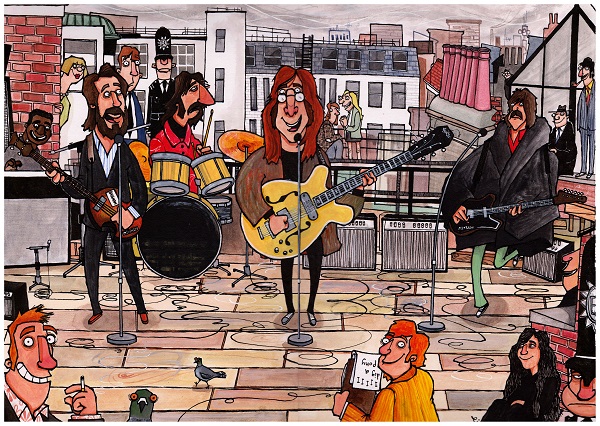 |
| The Beatles, 3 Savile Row, London; 30th January 1969 (a Thursday) |
The band began their set with Get Back. Now a song about as familiar to everyone in Britain as the National Anthem (they would play this too, incidentally, while the film crew changed the reels in their cameras), at the time it was so shiny new that it probably took anyone in earshot a minute or so to put together exactly what the hell was going on. They soon realised, however, and a genuine cross-section of British society all began to try as best they could to get a better look. In the film, we see excitable secretaries hurling themselves across busy roads, taxi drivers rubbernecking, businessmen who are old enough to have seen everything wearing faces of childlike wonder and, my own personal favourite, an old boy with a bowler hat and umbrella climbing up a ladder on the outside of a building to stand on his own roof and take in the scene with his hands in his raincoat pockets. The Beatles played Get Back twice in succession, with the first of these performances featuring in the final cut of the Let It Be film.
Next up was Don't Let Me Down, and again it was the first of the two performances of John Lennon's new song that afternoon that made it to the final cut of the movie, in spite of the fact that he forgets the words and fluffs a verse mid-way through. Don't Let Me Down would appear on the B side of the Get Back single that April, although it was inexplicably cut from the final Let It Be album by its producer. This would normally represent the biggest dick move of any producer's career, but in this case I think we can make an exception as the culprit in this instance was Phil Spector.
The fourth song of the set was a first of two versions of I've Got A Feeling. In the film, it accompanies a slew of interviews with the spectators who had gathered on the streets below and you can easily, even if you are familiar with the record, miss the fact that the version that appeared on the final album is this live performance. It is a persuasive hint of just how tight The Beatles' playing was that day. Having not played live to anyone in almost a thousand days, on a frigid London rooftop and singing to leaden, empty January skies, here was a band who still had it, never lost it and had sufficient left to just give it away. The next song in the set, One After 909 would also appear on the LP in its live form.
Song six is Dig A Pony. Ringo Starr bellows “hold it!” to halt the introduction because he had been trying to choke down a cheeky cigarette and needed to extinguish it. Lennon, meanwhile, is not confident in his lyrical recall and reads them off book – held in front of him by a lackey no doubt pondering that this will probably be the greatest thing that ever happens to him in his whole life.
By this point, there is considerable commotion in and around the streets of London, as one might expect when the world's greatest rock and roll band play a free concert completely on a whim in the centre of one of the world's great capital cities. Not everyone shares quite the sense of wonder that the whole occasion engenders within me, however. This is, after all, England and English people will always react accordingly. “This type of music is all right in its place and I think it's quite enjoyable,” explains a besuited business type who could be any age from an old 30 to a young 55, “but I think its a bit of an imposition to absolutely disrupt all the business in this area”. As a fellow Englishman, it is hard to argue with him on this point, even though I feel that there need to be exceptions to many a hard and fast rule, particularly if The Beatles are involved. Perhaps he was one of the people who called in the Old Bill to sort it out. Either way, there was by now a growing police presence in Savile Row. They were initially denied entrance to number 3 by the Apple Corps staff, perhaps mindful that the building probably contained all of the drugs in the entire world. However, once the rozzers began threatening arrests for obstruction, uniformed officers slowly began to percolate throughout the building and onto the roof itself.
Still treading the duck boards, The Beatles were by now onto their seventh and eighth numbers of the set, second versions of I've Got A Feeling and Don't Let Me Down. In the latter case, Lennon manages to get the lyrics right and as such a complete live version of the song could later be stitched together and released on Let It Be: Naked. By this point, the powers that be were really rather insistent that the band should stop making this unholy and unexpected racket. Perhaps they were just fed up with all the repetition and could have been placated with a few verses of Ticket To Ride? We'll never know.
Now surrounded by enough police officers to host an FA Cup tie, the band lurched into their final song, the last they would ever play in public together. It was a third performance of Get Back and it is the scuzziest yet, not helped by the fact that the groups' long-suffering personal assistant Mal Evans had been told to turn off the amplifiers by a police officer and, understandably enough, had complied with the instruction. The sound drops out as Lennon and Harrison try to wail on their axe only to get a handful of silence, before both men plug themselves in again on the fly while the song rolls on almost seamlessly. This third version is the one that was released in Anthology 3, complete with McCartney's improvised final verse: “you've been playing on the roof again, and that's no good, your momma doesn't like that, she's going to have you arrested!”. The song concludes hurriedly and is greeted by a loud cheer from Maureen Starkey, Ringo's wife. “I'd like to thank you on behalf of the group and myself and I hope we've passed the audition,” says Lennon to peals of part-sycophantic, part-nervous, part-genuine laughter. The Beatles may not have left the building, but they were no longer on its roof.
In the end, no-one was arrested, a fact made scarcely credible by the sheer quantity of narcotics contained within the Apple building. Perhaps The Beatles had built up enough residual goodwill that the police were willing to turn a blind eye. They had just played a killer gig, after all, and as a passing vicar points out in the finished film, “it's nice to get something for free in this country at the moment...”
However, the long term effects on the group would take their toll. The Get Back sessions had been marred by so much ill-feeling that the album and feature film were shelved, the group instead throwing themselves into recording what would become Abbey Road, a more fitting final hurrah for the band that had changed the course of Western culture forever. On April 10th 1970 (a Friday), Paul McCartney announced that he had left the band and The Beatles were no more. The following month, a Phil Spector-produced rehash of the turbulent Get Back sessions would be released as the Let It Be album, in tandem with a feature film of the same name. Both were hugely successful at the time but have subsequently been reviewed in a far harsher light, unfairly so in my view. There are brilliant moments in each and, although it isn't nice to see it when mummy and daddy fight, they both still love us all the same.
Imagine being there, though. That day in January, now fifty years ago. A moment of history, lovingly recorded so that we can all still be a part of it, unfolding before your very eyes and ears. It must have been hard to fully comprehend the magnitude of what you had witnessed, a process that could only truly begin once it was confirmed that these four brilliant men would never again play together. A process that still isn't over now, as current and future generations still come to grips with what The Beatles did and what they gave us. They were the big bang that created our cultural universe. This was their farewell.
Monday, 23 January 2017

Thursday, 16 June 2016
Get Up, Get Into It, Get Involved
I want to talk a bit about Martin Luther King, a great man.
I got to thinking about Martin Luther King today because a British MP was shot and killed in Yorkshire. The motives behind this are unclear at present. Some say that the perpetrator said "Britain First", the name of a far-right group in the UK. Perhaps he said "Britain first", a remark aimed at his victim's support of the campaign that seeks to keep the United Kingdom from voting to leave the European Union. Perhaps he said neither. Perhaps nothing. It doesn't matter, does it? Whatever he said, thought or did, his action was the snap of a society that has been stretched and stretched and hectored and frightened and alarmed to the point that it couldn't take the tension any more. Stretched and warped and terrified by the self same politicians and media that will now duly dole out their platitudes of shock and sorrow.
I spent the early afternoon doing the live blog for Twohundredpercent, the critically-acclaimed football website. I was covering England's match with Wales. It should have been a good day. Unfortunately, it was not.
When I checked to see Twitter's verdict at half time, instead I found out about this shooting. Shortly after the final whistle, the MP's death was announced. Her name was Jo Cox. She was 41 years old, 42 in a couple of weeks. She was only 6 years older than me and had two young children. She stood up for lots of causes that I, personally, find very admirable. But that doesn't matter, either, does it? What her political beliefs were aren't the issue here, the reason this is so numbing and horrible.
At moments like these nowadays, I find myself compelled to keep checking Twitter. Twitter - social media generally - has been such a force for good in my life that, when I am feeling lost or hurt, I guess I look to it so it can work its magic. But there was nothing there today. Just my own feelings reflected back at me. A scream in an echo chamber.
I saw all sorts of things being said. People who had never previously expressed any faith wondering if this year had been portentous of some sort of Biblical reckoning. People wanting to leave. People not wanting to come back. The journalist Abi Wilkinson asked "Does anyone have any thoughts about what we're supposed to do?". It's a good question.
Luckily, her erstwhile colleague Martin Belam had an answer. He posted a thread of tweets talking about expressing his thoughts and feelings and finished it with a picture of Ron Mael, from Sparks. It was a bit cryptic, but I assumed that it was an act of defiance. Why not defiance? I immediately went to YouTube and put on This Town Ain't Big Enough for the Both Of Us. It summed up my feeling towards the growing cloud of extremism and extremist views in the UK. This may have been exactly what Martin Belam had in mind, too, for all I know.
Music is one of life's great consolations. When the world outside is raging in tempest, I use it as a coping strategy. Shut out the noise with something I can control. Try to find some calm, some sense of perspective.
Recently, I've been listening to Star Time, a 1991 four-CD compilation of James Brown's most essential work. Out of reflex, I think, I started there. I'm glad I did, because it immediately got me thinking about the Civil Rights struggle in the United States.
I am decidedly pro-EU. Next Thursday I will be voting to Remain and hope that as many of my fellow UK citizens as possible will do the same, But as big an unknown as a Leave victory is, as nauseated as worrying about it has made me feel lately, even Brexit isn't as bad as what black people had to endure up to the middle of the 20th Century in America (and beyond, and elsewhere). Being a member of what is now increasingly angrily decried and dismissed as "the left" is not nearly as niche or as vulnerable a position as it perhaps feels this evening. What it needs - what we need - is leaders.
Which is how I got to thinking about Martin Luther King. Few of us could ever aspire to match King for his measure, calm and constructiveness in the face of the most impossible, virulent and hate-filled odds. But we can aspire to at least try, in our own small way, to remember his example and to act on it.
Above all, leaders are brave people. It takes courage to stand up and speak your mind, to stand up for what you think is right. It is tempting to curl up in a ball and wish it will all go away. Brexit, terrorism, mass shootings in America, hooliganism in European football and now a political assassination on the British mainland. The world seems like it is out of control.
I choose to believe it is not. I choose instead to believe that the media is out of control. There is now infinite space on websites, timelines and airwaves to saturate the world with every single event that is happening. It is quite overwhelming, which is the problem to the greater extent. But it is a reality of life these days. To disengage from it would not be the brave thing to do. Not what a leader would do.
Jo Cox MP was a leader. Let's stand with her. Let's make every Jo Cox who falls doing good for humanity spawn ten more Jo Coxes. Not in a militant sense, but a regenerative one. A quiet determination to see everyone doing a little better, to see a wrong and try to make it right. To be brave. To stand up. To be counted in the best way anybody can: by example and by compassion; with humility and with humour; with humanity. Without ever losing sight of the world we would have our fellow live in.
This post is dedicated to Jo Cox MP (1974-2016). Here is a link to Oxfam's Syria appeal donation page, one of the many good causes she supported during her life.
I got to thinking about Martin Luther King today because a British MP was shot and killed in Yorkshire. The motives behind this are unclear at present. Some say that the perpetrator said "Britain First", the name of a far-right group in the UK. Perhaps he said "Britain first", a remark aimed at his victim's support of the campaign that seeks to keep the United Kingdom from voting to leave the European Union. Perhaps he said neither. Perhaps nothing. It doesn't matter, does it? Whatever he said, thought or did, his action was the snap of a society that has been stretched and stretched and hectored and frightened and alarmed to the point that it couldn't take the tension any more. Stretched and warped and terrified by the self same politicians and media that will now duly dole out their platitudes of shock and sorrow.
I spent the early afternoon doing the live blog for Twohundredpercent, the critically-acclaimed football website. I was covering England's match with Wales. It should have been a good day. Unfortunately, it was not.
When I checked to see Twitter's verdict at half time, instead I found out about this shooting. Shortly after the final whistle, the MP's death was announced. Her name was Jo Cox. She was 41 years old, 42 in a couple of weeks. She was only 6 years older than me and had two young children. She stood up for lots of causes that I, personally, find very admirable. But that doesn't matter, either, does it? What her political beliefs were aren't the issue here, the reason this is so numbing and horrible.
At moments like these nowadays, I find myself compelled to keep checking Twitter. Twitter - social media generally - has been such a force for good in my life that, when I am feeling lost or hurt, I guess I look to it so it can work its magic. But there was nothing there today. Just my own feelings reflected back at me. A scream in an echo chamber.
I saw all sorts of things being said. People who had never previously expressed any faith wondering if this year had been portentous of some sort of Biblical reckoning. People wanting to leave. People not wanting to come back. The journalist Abi Wilkinson asked "Does anyone have any thoughts about what we're supposed to do?". It's a good question.
Luckily, her erstwhile colleague Martin Belam had an answer. He posted a thread of tweets talking about expressing his thoughts and feelings and finished it with a picture of Ron Mael, from Sparks. It was a bit cryptic, but I assumed that it was an act of defiance. Why not defiance? I immediately went to YouTube and put on This Town Ain't Big Enough for the Both Of Us. It summed up my feeling towards the growing cloud of extremism and extremist views in the UK. This may have been exactly what Martin Belam had in mind, too, for all I know.
Music is one of life's great consolations. When the world outside is raging in tempest, I use it as a coping strategy. Shut out the noise with something I can control. Try to find some calm, some sense of perspective.
Recently, I've been listening to Star Time, a 1991 four-CD compilation of James Brown's most essential work. Out of reflex, I think, I started there. I'm glad I did, because it immediately got me thinking about the Civil Rights struggle in the United States.
I am decidedly pro-EU. Next Thursday I will be voting to Remain and hope that as many of my fellow UK citizens as possible will do the same, But as big an unknown as a Leave victory is, as nauseated as worrying about it has made me feel lately, even Brexit isn't as bad as what black people had to endure up to the middle of the 20th Century in America (and beyond, and elsewhere). Being a member of what is now increasingly angrily decried and dismissed as "the left" is not nearly as niche or as vulnerable a position as it perhaps feels this evening. What it needs - what we need - is leaders.
Which is how I got to thinking about Martin Luther King. Few of us could ever aspire to match King for his measure, calm and constructiveness in the face of the most impossible, virulent and hate-filled odds. But we can aspire to at least try, in our own small way, to remember his example and to act on it.
Above all, leaders are brave people. It takes courage to stand up and speak your mind, to stand up for what you think is right. It is tempting to curl up in a ball and wish it will all go away. Brexit, terrorism, mass shootings in America, hooliganism in European football and now a political assassination on the British mainland. The world seems like it is out of control.
I choose to believe it is not. I choose instead to believe that the media is out of control. There is now infinite space on websites, timelines and airwaves to saturate the world with every single event that is happening. It is quite overwhelming, which is the problem to the greater extent. But it is a reality of life these days. To disengage from it would not be the brave thing to do. Not what a leader would do.
Jo Cox MP was a leader. Let's stand with her. Let's make every Jo Cox who falls doing good for humanity spawn ten more Jo Coxes. Not in a militant sense, but a regenerative one. A quiet determination to see everyone doing a little better, to see a wrong and try to make it right. To be brave. To stand up. To be counted in the best way anybody can: by example and by compassion; with humility and with humour; with humanity. Without ever losing sight of the world we would have our fellow live in.
This post is dedicated to Jo Cox MP (1974-2016). Here is a link to Oxfam's Syria appeal donation page, one of the many good causes she supported during her life.
Saturday, 4 June 2016
Muhammad Ali, 1942-2016
Muhammad Ali left us today, in as far as he ever can.
Cassius Marcellus Clay Jr. was just a boxer. A boxer in the same way, perhaps, that Pelé was just a footballer, but just a boxer all the same. Muhammad Ali, however, was a politician, a poet, a wit, a diplomat, a contrarian, a storyteller, a peace campaigner, a husband, a father, a religious advocate, a motivational speaker, a pillar of the civil rights movement, a television personality, a social theorist, a comedian, a villain, a hero, a martyr.
He was also twice the heavyweight boxing champion of the world. Having been stripped of the title for his social and political ideals in the turbulence of 1960s America, he regained it - aged 32 - against George Foreman in Zaire with such a breathtakingly audacious combination of brawn and brains that it walked the unseen line that divides life and death. Just under a year later, he retained the belt fighting Joe Frazier in the Philippines. Flirting with that line again, The Thrilla In Manila was a contest of such punishing circumstances that everyone involved was pushed to the outer limits of the known human capacity for endurance: physical, emotional, spiritual.

In the end, Muhammad Ali was a leader. Never before or since has a sporting figure so supervened their station and entered the wider public consciousness with such vitality or luminous brilliance. Ali is a hero to more than just those who follow boxing or saw him fight. Some, I'm sure, don't even know he was a fighter. After a time, it became incidental anyway. Muhammad Ali went beyond labels, beyond time and place.
Muhammad Ali gave people hopes and dreams; his foibles, mistakes and indiscretions serving only to make us feel better about those of our own. To come across Ali's story is to be moved, thrilled, excited. It is energising in a way that speaks to the human spirit at a most fundamental level.
His story will be discussed for as long as human beings are. The words "The Greatest" will never be far away, drawn magnetically towards one another. It was Clay - the boxer - who first immodestly bestowed himself with the moniker. In later years, Ali would admit he had done so without even realising yet that he was. Nevertheless, it was prescient in the extreme: Ali's life continued along a path of transcendence as if, at times, guided by an unseen hand.
Those of us today, living on in his wake, are blessed and cursed. Cursed because we are too close to properly appreciate Muhammad Ali with anything like the true perspective that his life, his achievements, his personality, his essence, will ultimately demand. It may take tens, or hundreds, of years for that to be possible. But we are blessed, too: no-one else in human history will be able to boast that they had shared a planet with him, had the opportunity to see their lives directly impacted or influenced by his in real time.
Muhammad Ali was bigger than boxing, bigger than sport. His was the ineffable spark of humanity. This was as good as it gets. He is the greatest.
Cassius Marcellus Clay Jr. was just a boxer. A boxer in the same way, perhaps, that Pelé was just a footballer, but just a boxer all the same. Muhammad Ali, however, was a politician, a poet, a wit, a diplomat, a contrarian, a storyteller, a peace campaigner, a husband, a father, a religious advocate, a motivational speaker, a pillar of the civil rights movement, a television personality, a social theorist, a comedian, a villain, a hero, a martyr.
He was also twice the heavyweight boxing champion of the world. Having been stripped of the title for his social and political ideals in the turbulence of 1960s America, he regained it - aged 32 - against George Foreman in Zaire with such a breathtakingly audacious combination of brawn and brains that it walked the unseen line that divides life and death. Just under a year later, he retained the belt fighting Joe Frazier in the Philippines. Flirting with that line again, The Thrilla In Manila was a contest of such punishing circumstances that everyone involved was pushed to the outer limits of the known human capacity for endurance: physical, emotional, spiritual.
In the end, Muhammad Ali was a leader. Never before or since has a sporting figure so supervened their station and entered the wider public consciousness with such vitality or luminous brilliance. Ali is a hero to more than just those who follow boxing or saw him fight. Some, I'm sure, don't even know he was a fighter. After a time, it became incidental anyway. Muhammad Ali went beyond labels, beyond time and place.
Muhammad Ali gave people hopes and dreams; his foibles, mistakes and indiscretions serving only to make us feel better about those of our own. To come across Ali's story is to be moved, thrilled, excited. It is energising in a way that speaks to the human spirit at a most fundamental level.
His story will be discussed for as long as human beings are. The words "The Greatest" will never be far away, drawn magnetically towards one another. It was Clay - the boxer - who first immodestly bestowed himself with the moniker. In later years, Ali would admit he had done so without even realising yet that he was. Nevertheless, it was prescient in the extreme: Ali's life continued along a path of transcendence as if, at times, guided by an unseen hand.
Those of us today, living on in his wake, are blessed and cursed. Cursed because we are too close to properly appreciate Muhammad Ali with anything like the true perspective that his life, his achievements, his personality, his essence, will ultimately demand. It may take tens, or hundreds, of years for that to be possible. But we are blessed, too: no-one else in human history will be able to boast that they had shared a planet with him, had the opportunity to see their lives directly impacted or influenced by his in real time.
Muhammad Ali was bigger than boxing, bigger than sport. His was the ineffable spark of humanity. This was as good as it gets. He is the greatest.
Tuesday, 12 April 2016
Disaster Film Olympiad: Countdown To Looking Glass
Countdown To Looking Glass is an unlikely name for a film but it has a similarly unlikely premise: financial instability caused by a banking collapse suddenly intensifies the significance of a regional dispute in the Middle East, one that quickly descends into a proxy war between the Soviet Union and NATO forces which threatens to spill over into a global conflagration. None of this could ever happen.
As the new Soviet-backed, some say puppet, regime get down to business in Oman, the Western news media swing into action to help placate and inform the viewing trillions. The responsible souls of the major news outlets understand the significance of their role and would never dream of trying to spread panic or propaganda. They are our true heroes.
The disaster movie-as-faux-real-time-news-coverage is not an unusual concept, nor did it begin with Countdown To Looking Glass - 1983's Special Bulletin is a notable earlier example. However, Countdown has a few interesting twists and tweaks to the format designed to keep things fresh and interesting. Firstly, they engage the services of real life contributors: veteran American TV news stalwarts Eric Sevareid and Nancy Dickerson both appear as themselves as a senior analyst and senior reporter respectively. Additional opinion is provided by US Senator (and five-time former Presidential candidate) Eugene McCarthy, defence analyst Lincoln Bloomfield and Congressman (and all-round right wing diarrhoea cannon) Newt Gingrich. Although it is perhaps debatable as to the exact degree which each of the above understood what was actually going on, it nevertheless adds an interesting vérité to proceedings.
The second change to the format is that the real time news coverage is broken up by portions of melodrama, dealing with the real lives of both the lead anchor Don Tobin (played by Canadian news veteran Patrick Watson) and Washington reporter Dorian Waldorf (Helen Shaver). We watch on day by day as an increasingly anxious Tobin yaks on to his wife about the likely outcome of the unfolding crisis and, more significantly for the story, we see Waldorf's romantic relationship with a White House staffer lead to exclusives, high anxiety and heartbreak. Having gone to the trouble of getting real world contributors to weigh in on an entirely fictional story, these soap opera-style interludes could have been an eccentric move on the part of the producers. But oddly, it works: Shaver's story in particular has some very interesting and incisive points to make about the way that news events and the news media have become so interdependent as to have become self-sustaining; the exclusive story she uncovers from inside the Oval Office seems to have the potential to help defuse the spiralling situation only to be held back by the station's editorial policy.
It's all so grindingly predictable. This would ordinarily make for a damning condemnation of any film, but in this case it is not: the unfolding news coverage portions of the piece are done well enough that any despondency you feel tends to be despondency at the worst excesses of global politics and its vainglorious pride, its high ideals at the expense of the lives of its people. Sobering stuff, not least when - on the cusp of a nuclear exchange in the Strait of Hormuz - Newt Gingrich justifies the action as being crucial to the United States' vital stewardship of freedom and democracy around the world. Gallingly, this is something which required no acting talent at all on the Congressman's part because it also happens to be what Gingrich (in company with all of his contemporaries on the right of American politics) really thinks. Thanks, America.
Countdown To Looking Glass gets a spine tingling EIGHT out of ten Disaster Points.
As the new Soviet-backed, some say puppet, regime get down to business in Oman, the Western news media swing into action to help placate and inform the viewing trillions. The responsible souls of the major news outlets understand the significance of their role and would never dream of trying to spread panic or propaganda. They are our true heroes.
The disaster movie-as-faux-real-time-news-coverage is not an unusual concept, nor did it begin with Countdown To Looking Glass - 1983's Special Bulletin is a notable earlier example. However, Countdown has a few interesting twists and tweaks to the format designed to keep things fresh and interesting. Firstly, they engage the services of real life contributors: veteran American TV news stalwarts Eric Sevareid and Nancy Dickerson both appear as themselves as a senior analyst and senior reporter respectively. Additional opinion is provided by US Senator (and five-time former Presidential candidate) Eugene McCarthy, defence analyst Lincoln Bloomfield and Congressman (and all-round right wing diarrhoea cannon) Newt Gingrich. Although it is perhaps debatable as to the exact degree which each of the above understood what was actually going on, it nevertheless adds an interesting vérité to proceedings.
 |
| Don Tobin reports in Countdown To Looking Glass, shortly before kissing his ass goodbye |
The second change to the format is that the real time news coverage is broken up by portions of melodrama, dealing with the real lives of both the lead anchor Don Tobin (played by Canadian news veteran Patrick Watson) and Washington reporter Dorian Waldorf (Helen Shaver). We watch on day by day as an increasingly anxious Tobin yaks on to his wife about the likely outcome of the unfolding crisis and, more significantly for the story, we see Waldorf's romantic relationship with a White House staffer lead to exclusives, high anxiety and heartbreak. Having gone to the trouble of getting real world contributors to weigh in on an entirely fictional story, these soap opera-style interludes could have been an eccentric move on the part of the producers. But oddly, it works: Shaver's story in particular has some very interesting and incisive points to make about the way that news events and the news media have become so interdependent as to have become self-sustaining; the exclusive story she uncovers from inside the Oval Office seems to have the potential to help defuse the spiralling situation only to be held back by the station's editorial policy.
It's all so grindingly predictable. This would ordinarily make for a damning condemnation of any film, but in this case it is not: the unfolding news coverage portions of the piece are done well enough that any despondency you feel tends to be despondency at the worst excesses of global politics and its vainglorious pride, its high ideals at the expense of the lives of its people. Sobering stuff, not least when - on the cusp of a nuclear exchange in the Strait of Hormuz - Newt Gingrich justifies the action as being crucial to the United States' vital stewardship of freedom and democracy around the world. Gallingly, this is something which required no acting talent at all on the Congressman's part because it also happens to be what Gingrich (in company with all of his contemporaries on the right of American politics) really thinks. Thanks, America.
Countdown To Looking Glass gets a spine tingling EIGHT out of ten Disaster Points.
Wednesday, 30 March 2016
The Five Greatest Sports Stars of the 20th Century
Last year I made five drawings of the five people who I consider to be the greatest sports stars of the 20th Century and with typical efficiency I am only now doing anything with them. I love sport more than anything else, I think. Like great music or art, it transcends human experience with a potency far outreaching its remit. But, unlike music or art, it retains a crucial element of total objectivity. There are winners and losers in sport; for all the discussion and for all the postulation there will always come a time when all the bullshit must, through absolute necessity, stop. It is this which appeals to me on such a fundamental level. Elemental, even. I need it.
Choosing five outstanding people from the sporting field is foolhardy in the extreme and invariably shot through with bias, blind spots and flaws. Complaints to the usual place, perhaps. Or, even better, how about making your own list? Creative solutions to internet-based disagreement is surely the way forward. For my choices, I tried to pick five people whose greatness went beyond their particular field of endeavour. They are people who made a wider social impact, through their values, their example or their personality.
I consider them to be five of the most inspirational people the Twentieth Century produced.
5. Tommie Smith (1944-) - Athletics
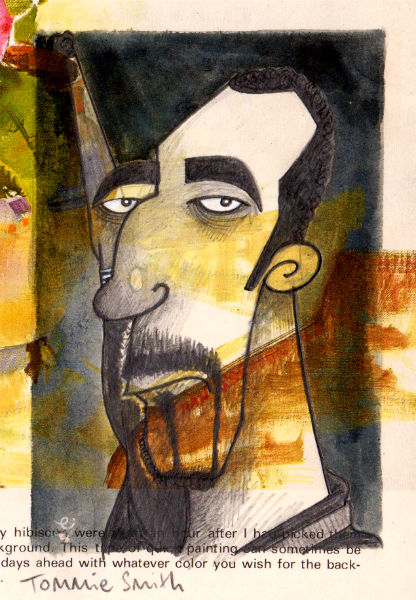
Tommie Smith crystallised an entire movement in one single perfect moment. On 16th October 1968 at the Mexico City Olympics, he won the 200 metres sprint in 19.83 seconds. It was an heroic enough performance as it stood: he had been nursing a hamstring injury through the heats and his display in the final was astonishing, the first time that 200 metres had been officially run in under twenty seconds in human history.
Quite rightly, however, Smith is better remembered for what he did on the podium. 1968 had been a year of tumult. In his homeland, it had seen the assassination of Martin Luther King and Robert Kennedy and the worsening of the conflict in Vietnam. The Civil Rights struggle was far too deeply ingrained to be solved simply by recourse to legislature and racial tension remained a tinderbox across the United States. As for the rest of the world, similar life-and-death struggles for recognition, for freedom and for human rights also raged: Northern Ireland, Warsaw, The Prague Spring, student uprisings in France and West Germany; the continuing stain of Apartheid in South Africa, as well as continuing tension in Israel and Palestine.
Tommie Smith's black gloved raised fist salute was seen as being a symbol of black power and association with the nascent Black Panther movement. In truth, it represented support for everything that is good and just in a year that had, at times, looked set to spiral out of control. Even if in the moment he, silver medallist Peter Norman of Australia and Smith's American teammate John Carlos may have not realised what an epochal gesture they had made, nearly 50 years on it remains the single most staggeringly eloquent reminder of sport's social potency.
Of course, Smith's reward was to be canned. Both he and Carlos were immediately sent home from the Olympics and made pariah by a significant proportion of American society. The following year, Smith moved into American Football, playing two games for the Cincinnati Bengals before becoming both a sociology teacher and an athletics coach at Oberlin College, Ohio.
4. Jesse Owens (1913-1980) - Athletics
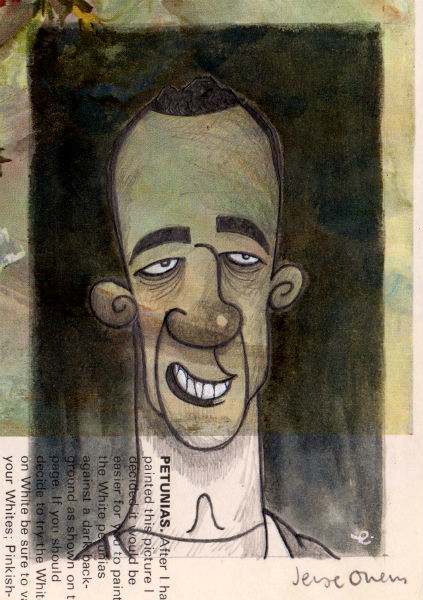
Jesse Owens was one of the greatest track athletes in history. During the 1935 Big Ten athletics meeting at Ann Arbor, Michigan, he broke three world records within 45 minutes. The following year, he won four gold medals in the 100 metre sprint, 200 metre sprint, 4x100 metre sprint relay and long jump at the Berlin Olympics.
Owens never set out to be a hero or a warrior for social justice. Both things just sort of caught up with him, even when nothing else could. He remains the ultimate fly in the ointment, the most celebrated up yours to the most insidious and evil political regime of modern human history. Adolf Hitler had, of course, designed the Berlin Olympics to be as carefully choreographed a love letter to the innate superiority of his Aryan supermen as any sporting event could be. But he had not reckoned on the basic truth of the forces at work in the sporting arena. 1936 was Owens' time and he would not be - could not have been - denied.
Much has been made of the Fuhrer's avoidance of Owens following his Olympic success. Debate still continues as to whether or not this was the result of prior engagements, a desire to not be caught out in an impending rainstorm or his virulent racism. The possibility even remains that the Nazi leader did seek out and congratulate Owens but that it was subsequently hushed up. The fact remains that Owens' feats were all featured in Leni Reifenstahl's state-funded 1938 film of the event, Olympia, whilst at home he remained a second-class citizen. It is this frequently ignored story which speaks with the greatest volume about the legacy of Jesse Owens, a campaigner for civil rights and social justice. He always maintained that it was not Hitler who snubbed him but his own President. "[He] didn't even send a telegram".
3. Ayrton Senna (1960-1994) - Motor racing
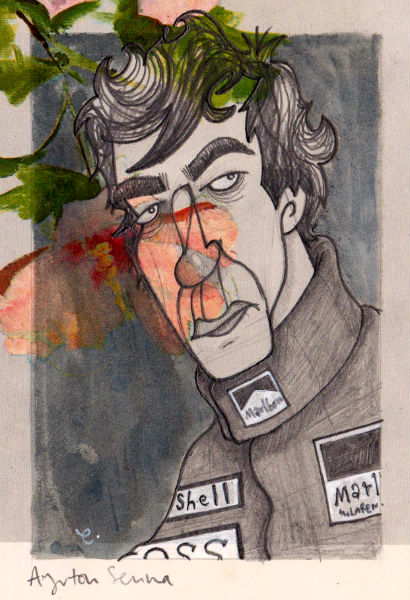
Ayrton Senna was the fastest racing driver who has ever lived. He drove like the devil was after him and he was trying to get away. And as fanciful a narrative as that sounds, the man himself would leave you in some doubt as to whether or not it was what was at stake. There are few people possessed of the kind of single-minded dedication, control and ability to achieve all that Senna did in his brief life, fewer still able to articulate it in quite the same mesmerising way that he did: all the more remarkable if you consider that he was often doing so in a second language.
The winner of 41 Grands Prix, three Formula 1 World Championships and 65 pole positions - the latter a record that it took even Michael Schumacher nearly a hundred additional career races to overhaul - Senna's numbers remain impressive but, as is the nature of many statistics, are slowly being subsumed by history. What will not go away is the story. Senna's electrifying presence transfixed the motor racing world; Formula 1 was Ayrton Senna and to set out to conquer it meant beating him. What will never go away is the footage. Some of it shows him doing things which are devious, questionable or downright reprehensible, all reminders of the fundamental flaws that reside within human beings. These were foes to overcome all as real as Alain Prost, Nelson Piquet, Nigel Mansell or Michael Schumacher. What will never go away is the sight of a man propelling a racing car along at a speed at which his rivals were either unable or unwilling to match.
Senna was a remarkable man. Born of considerable privilege and wealth, he nevertheless remains nothing less than a hero to millions of his disenfranchised and poverty stricken Brazilian countrymen. Clearly flawed and prone to behaviour on track so nefarious it could probably have been tried in a court of law, he remains a hero to every journalist and motorsport fan, one whose legacy grows with each passing year. Had he survived the crash in the 1994 San Marino Grand Prix which claimed him, he could well have been the President of Brazil by now. Or of the United Nations. He may even have been able to swing Pope. To assume anything less of Ayrton Senna always was to be confounded by him.
2. Billie Jean King (1943-) - Tennis

So much of the story of Twentieth Century sport, as with its history, is entangled with the story of race that it is easy to forget that the battle for equality was never just confined to the colour of a person's skin. Women's rights and LGBT rights were - are - just as defining and active a social battleground. Billie Jean King was a pioneer, a leader and a spokeswoman; a brilliant competitor who could have made all her most telling points on the court but chose to speak out off it as well. Moreover, she still is and still does all of these things.
Much is made of her participation in the famous Battle Of The Sexes tennis match, an event between the top female player of the day and Bobby Riggs, the 1939 Wimbledon singles champion who, at 55-years old believed he was still the match of any modern female player. King disabused him of this notion, defeating him comfortably 6-4, 6-3, 6-3. But in reality this was just a spectacle for the television and a silly old fool getting his comeuppance. Billie Jean King is better remembered for the way she lived her life day to day, a fact summed up by her belief that her most famous match's key virtue was getting people interested and enthused about the sport of tennis.
As a player she was an indefatigable competitor. Combined with a longevity rare in such a high impact sport - her career spanned four decades and lasted 24 years - it makes the case for her inclusion on any list of sporting greats on a statistical basis alone. What truly sets King apart for me is her bravery. It takes considerable courage to choose to continually put your head above the parapet because it is the right thing to do, especially when you are successfully operating in an arena which would make anyone quite able to happily and quietly feather their nest ready for a peaceful retirement. King refused to stand down; on the issue of professionalism in tennis, on the issue of equality for women, or on the issue of the acceptance of homosexuals into society. To this day, if Billie Jean speaks openly on any subject, we had better all be listening.
1. Muhammad Ali (1942-) - Boxing
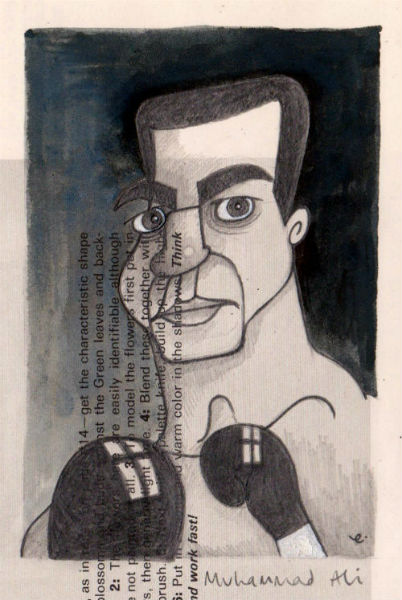
Muhammad Ali is the greatest. We have no excuse for this coming as a surprise as he has been telling us all for decades. It is perhaps to his greatest credit that the scale of his achievement - as a sportsman and as a human being - was such that it was nevertheless still surprising.
No other sporting figure has ever blurred so many social boundaries. He was both of our time and for all time; initially just a boxer, his extraordinary personality made him a star at a time in America where black people were supposed to know their place. Ali stood up and was counted. When this, as it inevitably would, made him enemies he stood louder and prouder. When they took away what was rightfully his he won it back in such impossibly heroic circumstances that it would be dismissed out of hand as a film treatment as simply too unbelievable.
Ali is a continual reminder to me that the search for a higher power is best attempted by looking around you. A glimpse into the eyes of Ali, even now as a frail man broken by disease and dulled by age, leaves me in no doubt as to his other-worldly power to inspire greatness in those around him. There will never be another sportsman who so unifies as many disparate sections of human society as Muhammad Ali. The greatest tribute of all is that, principle among the reasons for this is that Ali existed in the first place.
The five pictures that illustrate this piece are available to buy for £25 each, or £125 for the full set (including Pelé, who didn't make the cut). If you are interested, drop me a message on Facebook or send me an email.
Choosing five outstanding people from the sporting field is foolhardy in the extreme and invariably shot through with bias, blind spots and flaws. Complaints to the usual place, perhaps. Or, even better, how about making your own list? Creative solutions to internet-based disagreement is surely the way forward. For my choices, I tried to pick five people whose greatness went beyond their particular field of endeavour. They are people who made a wider social impact, through their values, their example or their personality.
I consider them to be five of the most inspirational people the Twentieth Century produced.
5. Tommie Smith (1944-) - Athletics
Tommie Smith crystallised an entire movement in one single perfect moment. On 16th October 1968 at the Mexico City Olympics, he won the 200 metres sprint in 19.83 seconds. It was an heroic enough performance as it stood: he had been nursing a hamstring injury through the heats and his display in the final was astonishing, the first time that 200 metres had been officially run in under twenty seconds in human history.
Quite rightly, however, Smith is better remembered for what he did on the podium. 1968 had been a year of tumult. In his homeland, it had seen the assassination of Martin Luther King and Robert Kennedy and the worsening of the conflict in Vietnam. The Civil Rights struggle was far too deeply ingrained to be solved simply by recourse to legislature and racial tension remained a tinderbox across the United States. As for the rest of the world, similar life-and-death struggles for recognition, for freedom and for human rights also raged: Northern Ireland, Warsaw, The Prague Spring, student uprisings in France and West Germany; the continuing stain of Apartheid in South Africa, as well as continuing tension in Israel and Palestine.
Tommie Smith's black gloved raised fist salute was seen as being a symbol of black power and association with the nascent Black Panther movement. In truth, it represented support for everything that is good and just in a year that had, at times, looked set to spiral out of control. Even if in the moment he, silver medallist Peter Norman of Australia and Smith's American teammate John Carlos may have not realised what an epochal gesture they had made, nearly 50 years on it remains the single most staggeringly eloquent reminder of sport's social potency.
Of course, Smith's reward was to be canned. Both he and Carlos were immediately sent home from the Olympics and made pariah by a significant proportion of American society. The following year, Smith moved into American Football, playing two games for the Cincinnati Bengals before becoming both a sociology teacher and an athletics coach at Oberlin College, Ohio.
4. Jesse Owens (1913-1980) - Athletics
Jesse Owens was one of the greatest track athletes in history. During the 1935 Big Ten athletics meeting at Ann Arbor, Michigan, he broke three world records within 45 minutes. The following year, he won four gold medals in the 100 metre sprint, 200 metre sprint, 4x100 metre sprint relay and long jump at the Berlin Olympics.
Owens never set out to be a hero or a warrior for social justice. Both things just sort of caught up with him, even when nothing else could. He remains the ultimate fly in the ointment, the most celebrated up yours to the most insidious and evil political regime of modern human history. Adolf Hitler had, of course, designed the Berlin Olympics to be as carefully choreographed a love letter to the innate superiority of his Aryan supermen as any sporting event could be. But he had not reckoned on the basic truth of the forces at work in the sporting arena. 1936 was Owens' time and he would not be - could not have been - denied.
Much has been made of the Fuhrer's avoidance of Owens following his Olympic success. Debate still continues as to whether or not this was the result of prior engagements, a desire to not be caught out in an impending rainstorm or his virulent racism. The possibility even remains that the Nazi leader did seek out and congratulate Owens but that it was subsequently hushed up. The fact remains that Owens' feats were all featured in Leni Reifenstahl's state-funded 1938 film of the event, Olympia, whilst at home he remained a second-class citizen. It is this frequently ignored story which speaks with the greatest volume about the legacy of Jesse Owens, a campaigner for civil rights and social justice. He always maintained that it was not Hitler who snubbed him but his own President. "[He] didn't even send a telegram".
3. Ayrton Senna (1960-1994) - Motor racing
Ayrton Senna was the fastest racing driver who has ever lived. He drove like the devil was after him and he was trying to get away. And as fanciful a narrative as that sounds, the man himself would leave you in some doubt as to whether or not it was what was at stake. There are few people possessed of the kind of single-minded dedication, control and ability to achieve all that Senna did in his brief life, fewer still able to articulate it in quite the same mesmerising way that he did: all the more remarkable if you consider that he was often doing so in a second language.
The winner of 41 Grands Prix, three Formula 1 World Championships and 65 pole positions - the latter a record that it took even Michael Schumacher nearly a hundred additional career races to overhaul - Senna's numbers remain impressive but, as is the nature of many statistics, are slowly being subsumed by history. What will not go away is the story. Senna's electrifying presence transfixed the motor racing world; Formula 1 was Ayrton Senna and to set out to conquer it meant beating him. What will never go away is the footage. Some of it shows him doing things which are devious, questionable or downright reprehensible, all reminders of the fundamental flaws that reside within human beings. These were foes to overcome all as real as Alain Prost, Nelson Piquet, Nigel Mansell or Michael Schumacher. What will never go away is the sight of a man propelling a racing car along at a speed at which his rivals were either unable or unwilling to match.
Senna was a remarkable man. Born of considerable privilege and wealth, he nevertheless remains nothing less than a hero to millions of his disenfranchised and poverty stricken Brazilian countrymen. Clearly flawed and prone to behaviour on track so nefarious it could probably have been tried in a court of law, he remains a hero to every journalist and motorsport fan, one whose legacy grows with each passing year. Had he survived the crash in the 1994 San Marino Grand Prix which claimed him, he could well have been the President of Brazil by now. Or of the United Nations. He may even have been able to swing Pope. To assume anything less of Ayrton Senna always was to be confounded by him.
2. Billie Jean King (1943-) - Tennis
So much of the story of Twentieth Century sport, as with its history, is entangled with the story of race that it is easy to forget that the battle for equality was never just confined to the colour of a person's skin. Women's rights and LGBT rights were - are - just as defining and active a social battleground. Billie Jean King was a pioneer, a leader and a spokeswoman; a brilliant competitor who could have made all her most telling points on the court but chose to speak out off it as well. Moreover, she still is and still does all of these things.
Much is made of her participation in the famous Battle Of The Sexes tennis match, an event between the top female player of the day and Bobby Riggs, the 1939 Wimbledon singles champion who, at 55-years old believed he was still the match of any modern female player. King disabused him of this notion, defeating him comfortably 6-4, 6-3, 6-3. But in reality this was just a spectacle for the television and a silly old fool getting his comeuppance. Billie Jean King is better remembered for the way she lived her life day to day, a fact summed up by her belief that her most famous match's key virtue was getting people interested and enthused about the sport of tennis.
As a player she was an indefatigable competitor. Combined with a longevity rare in such a high impact sport - her career spanned four decades and lasted 24 years - it makes the case for her inclusion on any list of sporting greats on a statistical basis alone. What truly sets King apart for me is her bravery. It takes considerable courage to choose to continually put your head above the parapet because it is the right thing to do, especially when you are successfully operating in an arena which would make anyone quite able to happily and quietly feather their nest ready for a peaceful retirement. King refused to stand down; on the issue of professionalism in tennis, on the issue of equality for women, or on the issue of the acceptance of homosexuals into society. To this day, if Billie Jean speaks openly on any subject, we had better all be listening.
1. Muhammad Ali (1942-) - Boxing
Muhammad Ali is the greatest. We have no excuse for this coming as a surprise as he has been telling us all for decades. It is perhaps to his greatest credit that the scale of his achievement - as a sportsman and as a human being - was such that it was nevertheless still surprising.
No other sporting figure has ever blurred so many social boundaries. He was both of our time and for all time; initially just a boxer, his extraordinary personality made him a star at a time in America where black people were supposed to know their place. Ali stood up and was counted. When this, as it inevitably would, made him enemies he stood louder and prouder. When they took away what was rightfully his he won it back in such impossibly heroic circumstances that it would be dismissed out of hand as a film treatment as simply too unbelievable.
Ali is a continual reminder to me that the search for a higher power is best attempted by looking around you. A glimpse into the eyes of Ali, even now as a frail man broken by disease and dulled by age, leaves me in no doubt as to his other-worldly power to inspire greatness in those around him. There will never be another sportsman who so unifies as many disparate sections of human society as Muhammad Ali. The greatest tribute of all is that, principle among the reasons for this is that Ali existed in the first place.
The five pictures that illustrate this piece are available to buy for £25 each, or £125 for the full set (including Pelé, who didn't make the cut). If you are interested, drop me a message on Facebook or send me an email.
Thursday, 10 March 2016
Disaster Film Olympiad: The Day The Earth Caught Fire
There are two things of which simply no good can ever possibly come: nuclear weapons and the international dateline. When they combine, the overall effect is inevitably catastrophic for all in its path. Unfortunately, these were the precise confluence of circumstances that were to assail the hard-working staff at the offices of The Daily Express in 1961, on a day... THE EARTH CAUGHT FIRE!
Typical tabloid hyperbole, that. The Earth did not literally catch fire, but it was nevertheless sickening for something pretty serious. The Day The Earth Caught Fire is an entertaining and considered Cold War fable that warns that the dangers of nuclear weapons - or not checking your calendar - stretch far beyond the obvious. The United States and the Soviet Union, now both building the spiffiest, most powerful hydrogen bombs that modern technology can muster, somehow contrive to each test them simultaneously on opposite ends of the globe without having first checked to see how time zones work. The overall effect throws the Earth off of its normal orbit and into an inevitable collision course with the Sun.
This annoys everybody. The new jaunty tilt of our celestial home causes havoc with the seasons, as drought, heatwaves, storms and floods beset countries quite unprepared to deal with the consequences. The action centres on the newspaper offices of central London, where to call the weather all to cock would barely do the situation justice. The temperature soars, causing a catastrophic drought, ruinously damaging thunderstorms and freak fogs. To be honest, it's pretty similar to what the weather is like in the 21st Century, although it is best to put that thought to the back of your mind since the upshot of all this is: we're doomed. The hardworking Daily Express staffers - motivated by the possibility of a worldwide scoop and powered only by cynicism, lukewarm Coca Cola and a bar tab that looks like Jeremy Hunt's parliamentary expenses claim - do their best to get to the bottom of the story, even though it turns their newspaper into a shrill, weather-obsessed, catastrophe rag. Which obviously could never happen.
It is an unusual disaster film, but it doesn't suffer at all for it: the main characters are reactive, rather than active; resigned rather than rallying. The film neatly captures the constrictive inevitability of a society that has contrived to destroy itself as we all feared it would. There are no heroes, just people being people. Some bad, some mad, but mostly good-hearted. Of course, a film is still always only a film, so a few compromises have to be made: of course our leading man Peter Stenning would take this opportunity to begin a torrid romantic entanglement with Jeannie Craig, a secretary from the Met Office. And naturally he will end up defending her honour from a bunch of feral beatnik water terrorists by engaging in fisticuffs in her apartment. These are things that happen in every film, no matter what the genre or the stakes.
On the whole, however, it is an absorbing and entertaining way to spend 90 minutes. Well, entertaining when one considers the oddly prescient nature of the subject matter: as I watched the film the sky outside was purple and the hail was falling upwards. Particularly pleasing is its ambiguous ending, as the dual forces of science and irony combine to decide the only way to save Earth from a certain fiery demise is to right its place in the heavens with... more atomic blasts. What will happen? The church bell ringers will be putting in for double overtime, if nothing else. It's hard enough ringing bells in normal temperatures and when adequately hydrated. More important still is that I have successfully managed to write the first ever retrospective review of The Day The Earth Caught Fire that doesn't mention it features a pre-super duper super stardom Michael Caine, playing a copper.
More worthy of note even than the revelation that Michael Caine has to eat food and pay his gas bill are the special effects. Considering the technological limitations of the time they stand up very well indeed. Particularly stunning are the vistas of London as a sun-bleached, dried out and abandoned husk - all made by the matte painting mastery of Les Bowie. Film making has become less of an art since computers came along, in many ways. Sigh.
The Day The Earth Caught Fire gets a smouldering EIGHT out of 10 Disaster Points.
 |
| For years, man has yearned to destroy the Sun... |
Typical tabloid hyperbole, that. The Earth did not literally catch fire, but it was nevertheless sickening for something pretty serious. The Day The Earth Caught Fire is an entertaining and considered Cold War fable that warns that the dangers of nuclear weapons - or not checking your calendar - stretch far beyond the obvious. The United States and the Soviet Union, now both building the spiffiest, most powerful hydrogen bombs that modern technology can muster, somehow contrive to each test them simultaneously on opposite ends of the globe without having first checked to see how time zones work. The overall effect throws the Earth off of its normal orbit and into an inevitable collision course with the Sun.
This annoys everybody. The new jaunty tilt of our celestial home causes havoc with the seasons, as drought, heatwaves, storms and floods beset countries quite unprepared to deal with the consequences. The action centres on the newspaper offices of central London, where to call the weather all to cock would barely do the situation justice. The temperature soars, causing a catastrophic drought, ruinously damaging thunderstorms and freak fogs. To be honest, it's pretty similar to what the weather is like in the 21st Century, although it is best to put that thought to the back of your mind since the upshot of all this is: we're doomed. The hardworking Daily Express staffers - motivated by the possibility of a worldwide scoop and powered only by cynicism, lukewarm Coca Cola and a bar tab that looks like Jeremy Hunt's parliamentary expenses claim - do their best to get to the bottom of the story, even though it turns their newspaper into a shrill, weather-obsessed, catastrophe rag. Which obviously could never happen.
It is an unusual disaster film, but it doesn't suffer at all for it: the main characters are reactive, rather than active; resigned rather than rallying. The film neatly captures the constrictive inevitability of a society that has contrived to destroy itself as we all feared it would. There are no heroes, just people being people. Some bad, some mad, but mostly good-hearted. Of course, a film is still always only a film, so a few compromises have to be made: of course our leading man Peter Stenning would take this opportunity to begin a torrid romantic entanglement with Jeannie Craig, a secretary from the Met Office. And naturally he will end up defending her honour from a bunch of feral beatnik water terrorists by engaging in fisticuffs in her apartment. These are things that happen in every film, no matter what the genre or the stakes.
On the whole, however, it is an absorbing and entertaining way to spend 90 minutes. Well, entertaining when one considers the oddly prescient nature of the subject matter: as I watched the film the sky outside was purple and the hail was falling upwards. Particularly pleasing is its ambiguous ending, as the dual forces of science and irony combine to decide the only way to save Earth from a certain fiery demise is to right its place in the heavens with... more atomic blasts. What will happen? The church bell ringers will be putting in for double overtime, if nothing else. It's hard enough ringing bells in normal temperatures and when adequately hydrated. More important still is that I have successfully managed to write the first ever retrospective review of The Day The Earth Caught Fire that doesn't mention it features a pre-super duper super stardom Michael Caine, playing a copper.
 |
| Daily Express journalist Peter Stenning (Edward Judd) in The Day The Earth Caught Fire: what would Princess Diana do? |
More worthy of note even than the revelation that Michael Caine has to eat food and pay his gas bill are the special effects. Considering the technological limitations of the time they stand up very well indeed. Particularly stunning are the vistas of London as a sun-bleached, dried out and abandoned husk - all made by the matte painting mastery of Les Bowie. Film making has become less of an art since computers came along, in many ways. Sigh.
The Day The Earth Caught Fire gets a smouldering EIGHT out of 10 Disaster Points.
Monday, 15 June 2015
Everything you thought you knew about dogs is wrong
I have a dog now. People who have been with me every step of this disjointed and increasingly stationary journey will no doubt be pleased to hear that it is the same dog as they have met before on these pages. He is still very much the same dog. I am still very much the same man. Although we are now both two-and-a-half years older, neither one of us has grown any wiser. We both smell a little worse and find standing up more of a chore but we remain, fundamentally, fuckwits.
The last time the dog and me had this association, he was just visiting. But now he is here to stay and we can dedicate ourselves full time to our ultimate goal, which is ruining each others' lives. He is winning and will win, as I was already convinced that my life was in ruin. Plus, you know, he is a dog and therefore pretty contented with his lot.
But even though the enriching life lessons part of pet ownership will almost invariably pass me by, I have nevertheless decided that I must use this opportunity for scientific enquiry and in so doing have discovered a great many things. Among these nuggets (of what are probably dog faeces) sit some pieces of information which will bust myths, explode paradigms and blow minds in equal measure. Everything you thought you knew about dogs, it turns out, is in fact wrong.
1. Dogs do NOT eat bones
Not a single bone. Not a one. Anyone expecting to see my dog sat down chowing into some osseous tissue will be shit out of luck. What dogs eat is in fact dog food, which is readily available in shops. But here's the rub: if you take your dog to the veterinary hospital and have it x-rayed (for example, on a night when there's nothing on the telly), you will find it to be completely full of bones. I do not know how these bones get in there.
2. People who do not like dogs or are scared of dogs will NOT like your dog
Anyone with a caninically nervous disposition has heard this one. "Oh, you'll like MY dog". In fact, you will not. Most people who are nervous around dogs dislike the rush of the approach, the jumping up, the frenzied and slobbery attempts at friendship, the barking. My dog does all of these things. It is, to be fair, only a little dog and as such these tendencies are more potentially adorable than if it was one of those horse-sized dogs. But the fact remains. My dog acts like pretty much all the other dogs and as such, if you do not like dogs you will probably not like my dog.
3. All dogs owners clean up after their dog
I am aware that this is a contentious belief and one directly challenged by the fly-strewn, humming, practically sentient, mountainous egg piles that adorn pretty much every busy thoroughfare and public park in the land. However, I have never seen a dog owner without a sack full of brown swinging, or at the very least the paraphernalia to hand to address the situation.
The massive, stinking, steamy curlers that you see everywhere are, therefore, utterly unexplained by science and may even be evidence of extra-terrestrial involvement in Earthly doings. A humbling thought and certainly one in the eye for anyone who has ever walked around Hove Recreation Ground this lunchtime and seen all of the dozens of piles of dog shit and thought to themselves, "for fuck's sake, clean up after your fucking dog, fuck me... Jesus, look at that one, fuck". It was as though the circus was in town and they'd been looking for somewhere to exercise the elephants. Or it would have been, had I not already explained that they were done by aliens.
Some of whom I would advise should probably consult a doctor.
The last time the dog and me had this association, he was just visiting. But now he is here to stay and we can dedicate ourselves full time to our ultimate goal, which is ruining each others' lives. He is winning and will win, as I was already convinced that my life was in ruin. Plus, you know, he is a dog and therefore pretty contented with his lot.
But even though the enriching life lessons part of pet ownership will almost invariably pass me by, I have nevertheless decided that I must use this opportunity for scientific enquiry and in so doing have discovered a great many things. Among these nuggets (of what are probably dog faeces) sit some pieces of information which will bust myths, explode paradigms and blow minds in equal measure. Everything you thought you knew about dogs, it turns out, is in fact wrong.
1. Dogs do NOT eat bones
Not a single bone. Not a one. Anyone expecting to see my dog sat down chowing into some osseous tissue will be shit out of luck. What dogs eat is in fact dog food, which is readily available in shops. But here's the rub: if you take your dog to the veterinary hospital and have it x-rayed (for example, on a night when there's nothing on the telly), you will find it to be completely full of bones. I do not know how these bones get in there.
 |
| Not a bone in sight |
2. People who do not like dogs or are scared of dogs will NOT like your dog
Anyone with a caninically nervous disposition has heard this one. "Oh, you'll like MY dog". In fact, you will not. Most people who are nervous around dogs dislike the rush of the approach, the jumping up, the frenzied and slobbery attempts at friendship, the barking. My dog does all of these things. It is, to be fair, only a little dog and as such these tendencies are more potentially adorable than if it was one of those horse-sized dogs. But the fact remains. My dog acts like pretty much all the other dogs and as such, if you do not like dogs you will probably not like my dog.
3. All dogs owners clean up after their dog
I am aware that this is a contentious belief and one directly challenged by the fly-strewn, humming, practically sentient, mountainous egg piles that adorn pretty much every busy thoroughfare and public park in the land. However, I have never seen a dog owner without a sack full of brown swinging, or at the very least the paraphernalia to hand to address the situation.
 |
| Hove Recreation Ground, mentioned in the text any moment now |
The massive, stinking, steamy curlers that you see everywhere are, therefore, utterly unexplained by science and may even be evidence of extra-terrestrial involvement in Earthly doings. A humbling thought and certainly one in the eye for anyone who has ever walked around Hove Recreation Ground this lunchtime and seen all of the dozens of piles of dog shit and thought to themselves, "for fuck's sake, clean up after your fucking dog, fuck me... Jesus, look at that one, fuck". It was as though the circus was in town and they'd been looking for somewhere to exercise the elephants. Or it would have been, had I not already explained that they were done by aliens.
Some of whom I would advise should probably consult a doctor.
 |
| The end. |
Friday, 17 October 2014
Brand new bollocks
The other evening Twitter alerted me to the fact that erstwhile comedian, actor and television presenter Russell Brand had occupied Wall Street. This came as little surprise, as he is turning into a right prat.
Russell Brand is an interesting sort of chap. Most people grow out of the risibly simplistic and teenage desire for revolution, or any other such tearing down of the existing social fabric, in their early twenties or whenever else they have finished college. Alas, Brand claims to be interested in doing so only now that he was reached comfortable middle age. One can only assume that this is born out of a desire for self-flagellation stemming from a lack of self-esteem, because come the revolution the first people against the wall will be big-gobbed Pre-Raphaelite millionaire fannies.
 Brand cannot just be dismissed out of hand. He has respect and an eager audience, not least off the back of a lot of his intelligent, sensitive and thoughtful journalism. But his transformation into a slacker messiah is particularly ill-timed. His arguments against voting could not really come at a worse time.
There are elements to his argument which are easy to sympathise with. British politics has been turning itself into a grey-brown morass of sameness for the best part of twenty years, ever since Tony Blair decided that the Labour Party were unelectable without transforming themselves into a nasty bunch of Thatcherite weasel bags. Voting is an increasingly difficult sell in these circumstances.
But there are still significant differences between the major British parties. No-one could pretend that a Labour government would have different inclinations and priorities to the current Coalition one, or that the path of the current government hasn't been influenced or tempered by the lousy, Quisling stink-bag Liberal Democrats. Yes, British political figures are a largely unlikeable bunch of braying, over-privileged tits, but ever was it thus.
The only result of apathy, however, is demagoguery. Political parties will tailor their policies towards those people who are likely to vote and to people who are likely to vote alone. What sort of policy would that make? Well, just check the polls and see how well UKIP are doing. Young, open-minded liberal people may feel increasingly marginalised by this but they're not going to see any improvements by disenfranchising themselves further; worse yet, by disenfranchising themselves through their own choice.
I like Russell Brand. I like him as a comedian, I like him as a broadcaster and I like him as a writer. I respect him. As such find his efforts to turn himself into David Icke all the more painful, not least because of the fact that he - ironically enough - represents many of the good things and positive things that a British government should be interested in fighting for. He is an intelligent, engaging and stimulating presence in our cultural life. But, to paraphrase Chris Rock's thoughts on Flavor Flav during the 2008 US Presidential election, Russell Brand needs to shut his fucking mouth until after next May. Because this is more important than his ego.
Russell Brand is an interesting sort of chap. Most people grow out of the risibly simplistic and teenage desire for revolution, or any other such tearing down of the existing social fabric, in their early twenties or whenever else they have finished college. Alas, Brand claims to be interested in doing so only now that he was reached comfortable middle age. One can only assume that this is born out of a desire for self-flagellation stemming from a lack of self-esteem, because come the revolution the first people against the wall will be big-gobbed Pre-Raphaelite millionaire fannies.
There are elements to his argument which are easy to sympathise with. British politics has been turning itself into a grey-brown morass of sameness for the best part of twenty years, ever since Tony Blair decided that the Labour Party were unelectable without transforming themselves into a nasty bunch of Thatcherite weasel bags. Voting is an increasingly difficult sell in these circumstances.
But there are still significant differences between the major British parties. No-one could pretend that a Labour government would have different inclinations and priorities to the current Coalition one, or that the path of the current government hasn't been influenced or tempered by the lousy, Quisling stink-bag Liberal Democrats. Yes, British political figures are a largely unlikeable bunch of braying, over-privileged tits, but ever was it thus.
The only result of apathy, however, is demagoguery. Political parties will tailor their policies towards those people who are likely to vote and to people who are likely to vote alone. What sort of policy would that make? Well, just check the polls and see how well UKIP are doing. Young, open-minded liberal people may feel increasingly marginalised by this but they're not going to see any improvements by disenfranchising themselves further; worse yet, by disenfranchising themselves through their own choice.
I like Russell Brand. I like him as a comedian, I like him as a broadcaster and I like him as a writer. I respect him. As such find his efforts to turn himself into David Icke all the more painful, not least because of the fact that he - ironically enough - represents many of the good things and positive things that a British government should be interested in fighting for. He is an intelligent, engaging and stimulating presence in our cultural life. But, to paraphrase Chris Rock's thoughts on Flavor Flav during the 2008 US Presidential election, Russell Brand needs to shut his fucking mouth until after next May. Because this is more important than his ego.
Thursday, 16 October 2014
The idiots are winning, on both sides
What is happening to the UK now only time will tell, but it's a chastening period nonetheless. Experience and knowledge of national character suggest to me that in the end there will be very little change, as to gain any measure of wider acceptance in Britain has always required a degree of moderateness. Moderation is, however, not currently in abundance. There is a distinct sense of the lunatics taking over the asylum.
On one side you've got UKIP, let's face it. One could try to find some sort of overarching name for them, but it seems a futile challenge. "Right-wing" is too relative a term while "fascists" is far too inflammatory and dense with historical implication. They're just UKIP. UKIP is the name given to the thing that embodies a recognisable British trope: deeply conservative, aggressively against change, NIMBYish, easily scared, blinkeredly nationalistic. All UKIP the political party have done is given them something specifically targeted to vote for.
They don't like Europe, the barmy EU or that crazy European Court of Human Rights. We don't need that sort here. We got by without them before. And by the way: re. World War II, you're WELCOME.
These people are idiots, but they've always been walking amongst us. My grandparents would probably all have been UKIP voters, given the chance. My grandparents weren't bad people. They certainly weren't snarling fascists, though people like that, too, have undeniably also always been part of the Great British melting pot. No, my grandparents were just not particularly clever.
The good thing about people not being particularly clever is that the situation is relatively easy to address: you educate them. Doing so is fairly easy, too, in this case. Tess Daly, Simon Cowell or Keith Lemon strongly coming out against the UKIP mentality would do it. As would The Daily Mail, The Daily Express or The Sun stopping being such unutterable bastards. A little bit of education would go a long way.
Of course, a little bit of education can create problems of its own. On the other side of the British equation these days are people so bleeding heart liberal it's a wonder they can even stand up. Their brand of hyper-equality is so relentlessly unquestioning and accepting that they would be just as big a problem as UKIP if they hadn't been brought up so well. They're less in-your face, but don't ever doubt that these sweaty, hand-wringing wassocks are just as big a bunch of idiots as the others.
They're the ones who argue that a there need to be more black football managers, disabled contestants on The Apprentice and that dogs and cats over five years old should get paternity leave. They are so busy trying to level the playing field that they don't realise that behind them they've been ploughing it. Call me old-fashioned, but I've always thought that the best person for the job is probably the best person for the job. If that person happens to be a 50-year old white man from Surrey, then so be it. 87% of people who live in the UK are white, after all, despite what the UKIPs will tell you, sweatily grinding their teeth down to powder.
The hand-wringers do have a point. It is, sadly, inescapable to note countless times throughout even this country's recent history that someone equally as qualified, as good for the role, will have been passed over because they are a woman, because they are disabled or because they are from an ethnic minority. Luckily, there are now laws against this. The victims of such discrimination have recourse to compensation and the culprits can and should face prosecution.
This is not an ideal scenario. In a perfect world, it wouldn't happen at all. But it is a good fall-back position. Better than the idea that, for every future managerial vacancy at a football club there should be at least one black candidate in the mix. Oh goody. We've (somehow) negotiated our way through the most turbulent and dangerous century in human history and what has popped out at the end? Tokenism. Get a token black candidate in. Make sure someone is disabled, too. There probably ought to be a Muslim, now we think of it. And a Christian, yes, OK. Anyone else for anyone else?
It's a hard-fought battle between two equally blinkered, difficult and self-righteous foes. For the people stuck in the middle it seems like an unrelenting deluge of shite. Luckily for us, social media at least lets us accurately design our own little worlds, free from the bellicose forces of dumb that rain down all around us. They're also a good place to share the latest viral videos! Today's one is of a child with a really very bad case of headlice!
Yes, they are speaking Spanish, why do you ask?
On one side you've got UKIP, let's face it. One could try to find some sort of overarching name for them, but it seems a futile challenge. "Right-wing" is too relative a term while "fascists" is far too inflammatory and dense with historical implication. They're just UKIP. UKIP is the name given to the thing that embodies a recognisable British trope: deeply conservative, aggressively against change, NIMBYish, easily scared, blinkeredly nationalistic. All UKIP the political party have done is given them something specifically targeted to vote for.
They don't like Europe, the barmy EU or that crazy European Court of Human Rights. We don't need that sort here. We got by without them before. And by the way: re. World War II, you're WELCOME.
These people are idiots, but they've always been walking amongst us. My grandparents would probably all have been UKIP voters, given the chance. My grandparents weren't bad people. They certainly weren't snarling fascists, though people like that, too, have undeniably also always been part of the Great British melting pot. No, my grandparents were just not particularly clever.
The good thing about people not being particularly clever is that the situation is relatively easy to address: you educate them. Doing so is fairly easy, too, in this case. Tess Daly, Simon Cowell or Keith Lemon strongly coming out against the UKIP mentality would do it. As would The Daily Mail, The Daily Express or The Sun stopping being such unutterable bastards. A little bit of education would go a long way.
Of course, a little bit of education can create problems of its own. On the other side of the British equation these days are people so bleeding heart liberal it's a wonder they can even stand up. Their brand of hyper-equality is so relentlessly unquestioning and accepting that they would be just as big a problem as UKIP if they hadn't been brought up so well. They're less in-your face, but don't ever doubt that these sweaty, hand-wringing wassocks are just as big a bunch of idiots as the others.
They're the ones who argue that a there need to be more black football managers, disabled contestants on The Apprentice and that dogs and cats over five years old should get paternity leave. They are so busy trying to level the playing field that they don't realise that behind them they've been ploughing it. Call me old-fashioned, but I've always thought that the best person for the job is probably the best person for the job. If that person happens to be a 50-year old white man from Surrey, then so be it. 87% of people who live in the UK are white, after all, despite what the UKIPs will tell you, sweatily grinding their teeth down to powder.
The hand-wringers do have a point. It is, sadly, inescapable to note countless times throughout even this country's recent history that someone equally as qualified, as good for the role, will have been passed over because they are a woman, because they are disabled or because they are from an ethnic minority. Luckily, there are now laws against this. The victims of such discrimination have recourse to compensation and the culprits can and should face prosecution.
This is not an ideal scenario. In a perfect world, it wouldn't happen at all. But it is a good fall-back position. Better than the idea that, for every future managerial vacancy at a football club there should be at least one black candidate in the mix. Oh goody. We've (somehow) negotiated our way through the most turbulent and dangerous century in human history and what has popped out at the end? Tokenism. Get a token black candidate in. Make sure someone is disabled, too. There probably ought to be a Muslim, now we think of it. And a Christian, yes, OK. Anyone else for anyone else?
It's a hard-fought battle between two equally blinkered, difficult and self-righteous foes. For the people stuck in the middle it seems like an unrelenting deluge of shite. Luckily for us, social media at least lets us accurately design our own little worlds, free from the bellicose forces of dumb that rain down all around us. They're also a good place to share the latest viral videos! Today's one is of a child with a really very bad case of headlice!
Yes, they are speaking Spanish, why do you ask?
Thursday, 24 July 2014
Which country has the best flag?
Flags are important and powerful things. They represent a whole nation's personality, history and identity. That is a lot of responsibility for anyone to take on, so it's little wonder that so many flags try to keep it as simple as possible.
But simple, formulaic flags are boring. Someone from France, Ireland or Romania might be moved by the sight of their tricolour, but it hardly sets the pulses racing from a purely aesthetic point of view. The majority of the world's flags fit in to these same-old, same-old templates.
This is not the case for this fly twenty-five. Unique design elements, unusual patterns and unexpected colours are their calling card. Imagine being from one of these countries and seeing your flag fluttering up its pole. "Hell yeah!", you'd scream, probably fit to punch a horse. Maybe you are. If so, rest assured that you are very lucky and leave those horses alone.
(NB: This list is 100% accurate and non-negotiable. Only flags from sovereign nations have been considered. Sorry Wales.)
25 Zimbabwe
24 Brazil
23 Qatar
22 Vietnam
21 Switzerland
20 Cyprus
19 Panama
18 Brunei
17 Swaziland
16 Eritrea
15 Comoros
14 Uganda
13 Papua New Guinea
12 Saint Lucia
11 Central African Republic
10 Seychelles
9 Bhutan
8 Guyana
7 Kiribati
6 Nepal
5 FYR Macedonia
4 Mozambique
3 Sri Lanka
2 Grenada
1 Antigua and Barbuda
But simple, formulaic flags are boring. Someone from France, Ireland or Romania might be moved by the sight of their tricolour, but it hardly sets the pulses racing from a purely aesthetic point of view. The majority of the world's flags fit in to these same-old, same-old templates.
This is not the case for this fly twenty-five. Unique design elements, unusual patterns and unexpected colours are their calling card. Imagine being from one of these countries and seeing your flag fluttering up its pole. "Hell yeah!", you'd scream, probably fit to punch a horse. Maybe you are. If so, rest assured that you are very lucky and leave those horses alone.
(NB: This list is 100% accurate and non-negotiable. Only flags from sovereign nations have been considered. Sorry Wales.)
25 Zimbabwe
 |
| A bird hat on your flag is worth two in the bush |
24 Brazil
 |
| "Ordem e Progresso" is Portuguese for "check THIS flag out" |
23 Qatar
 |
| Almost unique in design, completely unique in proportions and in colour. Score. |
22 Vietnam
 |
| It's not a unique design (Somalia has the same one but with a white star on a sky blue background), but something about this flag just screams "I AM VIETNAM". You'd probably guess it was the Vietnamese flag even if you didn't know. It is almost unimaginably beautiful as a piece of design. |
21 Switzerland
 |
| It's one of only two square flags in the world (Vatican City has the other) but this one wins. The subtlety and crisp accuracy of this flag gives me the horn and puts holes in me cheese. |
20 Cyprus
 |
| Cyprus go for the map flag. An over-literal approach, perhaps? Like hell it is. |
19 Panama
 |
| Oh HELLS yeah |
18 Brunei
 |
| There's all manner of things going on here. Keeps you entertained for hours. |
17 Swaziland
 |
| This flag wails "don't mess with us, we've got old time African tribal weapons up in this gaff" |
16 Eritrea
 |
| Like someone shot a tricolour through a prism, then folded it up wrong. Plus hand tree! |
15 Comoros
 |
| "What elements shall we put on our flag?" "All". |
14 Uganda
 |
| "Double Belgium sideways with a stork, please" |
13 Papua New Guinea
 |
| Stars. Bird. Diagonals. |
12 Saint Lucia
 |
| Turbomountain |
11 Central African Republic
 |
| CENTRAL VERTICAL BAND, BITCHES |
10 Seychelles
 |
| "Because fuck you, that's why" |
9 Bhutan
 |
| Diagonals. Dragons. Didragonals. |
8 Guyana
 |
| Bitchin' flag, this way >>> |
7 Kiribati
 |
| Come on |
6 Nepal
 |
| Because rectangles are for wimps |
5 FYR Macedonia
 |
| Brasso |
4 Mozambique
 |
| Star. Book. Hoe. And...AND... A MOTHER FUCKING AK-47. |
3 Sri Lanka
 |
| Every single thing about this flag rules. |
2 Grenada
 |
| Like playing the world's funnest board game, in the world's best circus, in space. On fire. |
1 Antigua and Barbuda
 |
| Look at the way the blue band seems to bend to form a horizon. More flags need optical illusions, please. |
Subscribe to:
Posts (Atom)