Pages

Friday, 30 September 2016

Naked POTUS, number 10: John Tyler

"Even the President of the United States must sometimes have to stand naked" - BOB DYLAN


He's not got any clothes on but I assure you that this is John Tyler (1790-1862), the tenth President of the United States. Let's find out more:

JOHN TYLER

Born 29th March 1790, Charles City County, Virginia
Died 18th January 1862, Richmond, Virginia

Presidential Term 6th April 1841 - 4th March 1845

John Tyler's actions following the death of President Harrison in April 1841 established a precedent for Presidential Succession that is now enshrined in the US Constitution. Tyler had been elected Vice President in 1840 and upon Harrison's death he took it upon himself to assume all of his duties. 

Shortly afterwards Tyler blocked the formation of the American Third Bank. This led to the entire cabinet, save for Secretary of State Daniel Webster, resigning in protest. Tyler spent the remainder of his Presidency without a party behind him.

Three days before the end of his Presidency, Tyler ratified the annexation of Texas, the first step towards its admission to the Union. On the final day of Tyler's administration, the US expanded to 27 States, with the addition of Florida.

Tyler oversaw both the Webster-Ashburton Treaty of 1842, establishing the border between the US and Canada in Maine; and the Treaty of Wanghia, which established US trade access to Chinese ports.

Tyler was the first President of the USA to have been born within the US Presidential era.

N.B. Some parts of the above image have been redacted by the CIA for reasons of national security. An unexpurgated version of all the naked Presidents will be made available at the end of the project.

Naked POTUS, number 9: William Henry Harrison

"Even the President of the United States must sometimes have to stand naked" - BOB DYLAN


Willy in the breeze, it is William Henry Harrison (1773-1841), ninth President of the United States. He'll catch his death of cold, dressed like that. Here are some facts:

WILLIAM H. HARRISON

Born 9th February 1773, Charles City County, Virginia
Died 4th April 1841, Washington D.C.

Presidential Term 4th March 1841 - 4th April 1841

William Harrison holds a number of distinctions as US President. He was the last to have been born as a British subject: Harrison was 3 years old at the time of the Declaration of Independence. Harrison was also the first President of the United States to have died in office and his Presidency is the shortest in US history at just 31 days. Although the possibility remains that Donald Trump could make Harrison's administration look like Franklin Roosevelt's.

Harrison rose to national prominence due to his military service and his role in the Battle of Tippecanoe in 1811, where the US army put down the Indian Confederacy led by Tecumseh. Harrison's early demise led to Tecumseh's Curse: no President elected in a year ending with 0 survived their full four year term again until Ronald Reagan in 1980, although he narrowly escaped death by assassination.

He won the 1840 Presidential election with 80% of the vote. It was also the first Presidential campaign to feature campaign advertisements and slogans.

Harrison caught cold giving a lengthy address at his Inauguration in a freezing cold and rainy Washington D.C. However, this is not considered to be the likely cause of his death, as the pneumonia which eventually took his life did not emerge until three weeks after that event.

At the time of his election, Harrison was the oldest man ever to assume the Presidency. He was the grandfather of Benjamin Harrison, the 23rd President.

N.B. Some parts of the above image have been redacted by the CIA for reasons of national security. An unexpurgated version of all the naked Presidents will be made available at the end of the project.

Naked POTUS, number 8: Martin Van Buren

"Even the President of the United States must sometimes have to stand naked" - BOB DYLAN


He's not got anything on but this is still Martin Van Buren (1782-1862), the eighth President of the United States. Here are the pertinent details:

MARTIN VAN BUREN

Born 5th December 1782, Kinderhook, New York
Died 24th July 1862, Kinderhook, New York

Presidential Term 4th March 1837 - 4th March 1841

Martin Van Buren was of Dutch descent but he was also the first President to have been born after the Declaration of Independence was signed in 1776, technically making him the first American to be the US President.

Van Buren rose to national prominence as a member of Andrew Jackson's Kitchen Cabinet, his personal cadre of advisors. The Whig Party were established in the US to oppose the Jackson administration and Van Buren beat the three candidates they put up nationwide in an attempt to reduce the Democrat vote.

His Presidency was largely uneventful but began with the Panic of 1837, an economic depression which ultimately led to the establishment of an independent Treasury. It also saw the second Seminole War and some more delicious ethnic cleansing of Native American tribes in the name of progress.

Van Buren also blocked the admission of Texas into the Union because their stance on slavery would have upset the balance established by the Missouri Compromise.

Van Buren served a single term as US President, unsuccessfully seeking re-election in both 1840 and 1844.

He was the second-shortest US President, standing 5 feet 6 inches. He is the only American President to have spoken English as a second language. His first language was Dutch.

N.B. Some parts of the above image have been redacted by the CIA for reasons of national security. An unexpurgated version of all the naked Presidents will be made available at the end of the project.

Naked POTUS, number 7: Andrew Jackson

"Even the President of the United States must sometimes have to stand naked" - BOB DYLAN


With the fresh air gently feathering his balls, it's Andrew Jackson (1767-1845), the seventh President of the United States. Let's learn.

ANDREW JACKSON

Born 15th March 1767, Waxhaws, North Carolina
Died 8th June 1845, Nashville, Tennessee

Presidential Term 4th March 1829 - 4th March 1837

Andrew Jackson was one of the most beloved Presidents in American history, the first to be elected due to his popularity rather than his politics. A distinguished soldier in the US military, by the 1812 War he had risen to the rank of Major General and his reputation was cemented when the forces he commanded defeated the English at the Battle of New Orleans in 1815. This took place several months after the Treaty of Gent had ended the 1812 War but they didn't have mobile phones or Twitter at that time and it took a while for the news to get through.

He was popularly known as Old Hickory, although this most likely had nothing to do with the dimensions of his penis.

Having narrowly lost out to John Quincy Adams in the 1824 Presidential election, Jackson received his party's nomination as their candidate for the 1828 election a full three years ahead of time.

Jackson was the second widower to serve as President of the United States. His wife, Rachel Donelson Jackson died a few months before he took office, perhaps as a result of an adultery scandal: Donelson had married Jackson in 1791 believing herself to be divorced but this was later proven to not be the case.

Jackson used his Presidential Veto more times than any of his predecessors, earning himself the moniker "King Andrew" among his critics.

Jackson was the first US President to be the subject of an attempted assassination. On 30th January 1835, unemployed house painter Richard Lawrence fired a gun at him as he was leaving a funeral held at the Capitol. Lawrence's gun misfired and Jackson took the opportunity to beat his assailant with his walking stick. The occasion left Jackson paranoid for the remainder of his life.

During Jackson's Presidency, the Union expanded to 26 member States, with the admission of Arkansas (1836) and Michigan (1837).

N.B. Some parts of the above image have been redacted by the CIA for reasons of national security. An unexpurgated version of all the naked Presidents will be made available at the end of the project.

Naked POTUS, number 6: John Quincy Adams

"Even the President of the United States must sometimes have to stand naked" - BOB DYLAN


The sixth President of the United States, which is six more items of clothing than he is wearing, was John Quincy Adams (1767-1848). Let's learn all about him.

JOHN QUINCY ADAMS

Born 11th July 1767, Braintree, Massachusetts
Died 23rd February 1848, Washington D.C.

Presidential Term 4th March 1825 - 4th March 1829

John Quincy Adams was the son of John Adams, the second President of the United States. He was the first relative of a President to himself serve in that office. He spent much of his childhood in Europe, where his father was serving ambassadorial roles. He attended school in both Paris and Amsterdam. 

Quincy Adams' wife, Louisa Johnson Adams, was English. She remains the only non-US citizen to be the First Lady.

Perhaps owing to his background, Adams spent much of his early political career in Europe as the US Ambassador to the Netherlands. He also served as the chief negotiator for peace with the UK after the 1812 war.

Adams won one of the narrowest elections in American history. With electoral college votes tied, the decision on who the President would be fell to the House of Representatives. Some behind the scenes horse trading saw Adams get the nod from Andrew Jackson, despite Jackson winning more of the popular vote. This came to be known as the Corrupt Bargain.

As a result of the means of his election, Adams was a dead duck President, largely unable to get through any of his legislation due to a lack of support. He followed in his father's footsteps and became the second single-term President of the US. 

John Quincy Adams is the only US President to serve in the US Congress after his Presidency.

N.B. Some parts of the above image have been redacted by the CIA for reasons of national security. An unexpurgated version of all the naked Presidents will be made available at the end of the project.

Thursday, 29 September 2016

Naked POTUS, number 5: James Monroe

"Even the President of the United States must sometimes have to stand naked" - BOB DYLAN


In plain view, it's James Monroe (1758-1831), the fifth President of the United States. Let's find out about him:

JAMES MONROE

Born 28th April 1758, Westmoreland County, Virginia
Died 4th July 1831, New York City, New York

Presidential Term 4th March 1817 - 4th March 1825

James Monroe was the third President of the United States to die on Independence Day, although not on Independence Day. The latter is a science-fiction action blockbuster film starring Will Smith. He was also the first American President to die outside his home State. Careless.

Monroe is primarily remembered for establishing the Monroe Doctrine, which still informs US foreign policy up to the present day. It stated that the American continents must no longer be considered as subjects for colonisation by foreign powers and that the United States had an important role in policing and defending this.

Monroe was a staunch anti-federalist and fought to enforce the right for individual States to pursue their own laws. Which is all very well until you get your cock out.

His Presidency was marked by a period of such stability and absence of partisanship that he stood unopposed at the 1820 Presidential Election, winning all but one Electoral College vote. Which was his wife's. 

Monroe was a former US Ambassador to France and was recalled to the United States by Thomas Jefferson to help negotiate the Louisiana Purchase. As a result of this vast territorial expansion, the Union duly expanded by five States during Monroe's Presidency: Mississippi (1817), Illinois and Alabama (both 1818), Maine (1820) and Missouri (1821). By the end of his term, the USA had 24 States.

Other notable events of the Monroe Presidency included the First Seminole War of 1817-18, where US troops quashed an uprising by Seminole Indians, who were invading Georgia from Spanish-held Florida. He also signed the Missouri Compromise, a document trying to balance the demands of slave States and non-slave States, which helped delay the outbreak of Civil War for several decades.

Liberia's capital city, Monrovia, is named for James Monroe.

N.B. Some parts of the above image have been redacted by the CIA for reasons of national security. An unexpurgated version of all the naked Presidents will be made available at the end of the project.

Naked POTUS, number 4: James Madison

"Even the President of the United States must sometimes have to stand naked" - BOB DYLAN

With his bits flapping, it's James Madison (1751-1836), the fourth President of the United States. Facts are as follows:

JAMES MADISON

Born 16th March 1751, Port Conway, Virginia
Died 28th June 1836, Orange, Virginia

Presidential Term 4th March 1809 - 4th March 1817

James Madison is remembered as the Father of the US Constitution. While he was not responsible for writing the entire document, he was a central figure in its production. Madison was also a significant author of the Bill of Rights (1791).

The most notable event of the Madison Presidency was the war of 1812, With England seemingly completely unwilling to stop attacking American ships, the United States declared war. They initially suffered heavy losses, ceding the city of Detroit without a shot having been fired and seeing several key buildings in Washington D.C., including the White House, burn down. However, they quickly consolidated their position thanks to their naval strength and the British were defeated at the Battle of Lake Erie. The war petered out as a stalemate by 1814 and Britain gave Detroit back in the end. Which was civil of them.

Two States joined the Union during the Madison Presidency: Louisiana (1812) and Indiana (1816). These were the eighteenth and nineteenth admissions.

James Madison remains the shortest of the 43 Presidents of the United States, standing at 1.63 metres (or 5 feet 4 inches), a full five centimetres (two inches) shorter than the next shortest President, Martin Van Buren. Maybe his mother was a smoker, who knows?

N.B. Some parts of the above image have been redacted by the CIA for reasons of national security. An unexpurgated version of all the naked Presidents will be made available at the end of the project.

Naked POTUS, number 3: Thomas Jefferson

"Even the President of the United States must sometimes have to stand naked" - BOB DYLAN


Here in the nip is Thomas Jefferson (1743-1826). He's that famous American scholar who WAS President, as opposed to Benjamin Franklin, the famous American scholar who wasn't. Facts:

THOMAS JEFFERSON

Born 13th April 1743, Shadwell, Virginia
Died 4th July 1826, Charlottesville, Virginia

Presidential Term 4th March 1801 - 4th March 1809

Thomas Jefferson was the last President of the United States to have been a signatory to the Declaration of Independence in 1776. He was also responsible for drafting the document. All together now: "...We hold these truths to be self-evident, that all men are created equal, that they are endowed by their Creator with certain unalienable Rights,...". The clever old goose.

Thomas Jefferson's election saw the first time that the party represented by the President changed; from Federalist to Democratic-Republican. He called this "the revolution of 1800". Which was doing it a bit brown.

Thomas Jefferson's Presidency saw a number of significant events. He oversaw the Louisiana Purchase in 1803, where the US bought large tracts of land west of the Mississippi river from France. It cost sixteen pounds. The following year, the expedition of Lewis and Clark began. Commissioned by Jefferson following the Louisiana Purchase, it sought to discover what else lay beyond the horizon in the continental US, in order that it might be bought or taken by force. Spoiler: it eventually all was.

In 1807, the slave trade was abolished. This would almost certainly prevent any further slavery-related intrigue occurring in 19th Century America.

During Jefferson's Presidency, a seventeenth State joined the Union: Ohio, on 1st March 1803.

Thomas Jefferson was the first American President to not have a First Lady: he was a widower throughout entire Presidential term, his wife Martha having died in 1782.

Jefferson and his erstwhile political rival (later close friend and correspondent) John Adams - the second President of the United States - both died on 4th July 1826, separated by a matter of hours. That day was the 50th anniversary of the signing of the Declaration of Independence, for which both men were present.

N.B. Some parts of the above image have been redacted by the CIA for reasons of national security. An unexpurgated version of all the naked Presidents will be made available at the end of the project.

Naked POTUS, number 2: John Adams

"Even the President of the United States must sometimes have to stand naked"  - BOB DYLAN, an American himself.

Here is John Adams (1735-1826). He's got nothing on, which is his right. He has earned this right, by being the President of the United States.  Here are the facts:

JOHN ADAMS

Born 30th October 1735, Braintree, Massachusetts
Died 4th July 1826, Quincy, Massachusetts

Presidential Term 4th March 1797 - 4th March 1801

John Adams was the first President of the United States to have been one of the signatories of the Declaration of Independence in 1776. He was also the first American President to only serve one term of office.

His Vice-President was Thomas Jefferson, who would replace him as President. Ungrateful. Adams and Jefferson were bitter rivals throughout their political careers but became close friends and regular correspondents in later life.

During his term of office, the capital of the United States was formalised in Washington, D.C. Before this, Congress had met in various major cities on the east coast of the USA including Philadelphia, New York City and Annapolis, Maryland.

N.B. Some parts of the above image have been redacted by the CIA for reasons of national security. An unexpurgated version of all the naked Presidents will be made available at the end of the project.

Naked POTUS, number 1: George Washington

"Even the President of the United States must sometimes have to stand naked", as Bob Dylan quite correctly pointed out. For instance, they might be one of those people who don't feel comfortable doing a poo with any clothes on.


Standing before you as pink and perfect as the day he was born is George Washington (1732-1799). Even the really stupid amongst you, people who voted for Brexit or think Donald Trump is a force for good for instance, will almost certainly know that George Washington was the first President of the United States, having handed the British a whupping the likes of which they would never forget.

Ironically enough, most British people have forgotten about it, but we still remember you, George. Here's a George Washington fact file so that you can at least leave this situation a little wiser.

GEORGE WASHINGTON

Born 22nd February 1732, Westmoreland County, Virginia.
Died 14th December 1799, Mount Vernon, Virginia

Presidential Term 30th April 1789 - 4th March 1797

George Washington remains the only US President to have been elected unanimously. His refusal to stand for a third term of office is the reason that American Presidents would serve a maximum of eight years. This limit has since been enshrined in the US Constitution by the 22nd Amendment in 1947.

During his Presidency, three States joined the Union: Vermont (1791), Kentucky (1792) and Tennessee (1796). It also saw the ratification of the US Bill of Rights in 1791.

In spite of his central role to the American Revolutionary War and the United States' independence from the United Kingdom, George Washington was not one of the 56 signatories on the Declaration of Independence in 1776.

At 1.88 metres in height, George Washington is the fourth tallest American President. He is one of four American Presidents to be depicted on the side of Mount Rushmore.

N.B. Some parts of the above image have been redacted by the CIA for reasons of national security. An unexpurgated version of all the naked Presidents will be made available at the end of the project.

Tuesday, 28 June 2016

Brexit art


Prints, t-shirts, tote bags and notebooks are all available via Redbubble. I will also be doing a STRICTLY LIMITED run of FIFTY hand signed prints. If you are interested, details can all be found on my Facebook page: facebook.com/dotmundart/

Thursday, 16 June 2016

Get Up, Get Into It, Get Involved

I want to talk a bit about Martin Luther King, a great man.

I got to thinking about Martin Luther King today because a British MP was shot and killed in Yorkshire. The motives behind this are unclear at present. Some say that the perpetrator said "Britain First", the name of a far-right group in the UK. Perhaps he said "Britain first", a remark aimed at his victim's support of the campaign that seeks to keep the United Kingdom from voting to leave the European Union. Perhaps he said neither. Perhaps nothing. It doesn't matter, does it? Whatever he said, thought or did, his action was the snap of a society that has been stretched and stretched and hectored and frightened and alarmed to the point that it couldn't take the tension any more. Stretched and warped and terrified by the self same politicians and media that will now duly dole out their platitudes of shock and sorrow.

I spent the early afternoon doing the live blog for Twohundredpercent, the critically-acclaimed football website. I was covering England's match with Wales. It should have been a good day. Unfortunately, it was not.

When I checked to see Twitter's verdict at half time, instead I found out about this shooting. Shortly after the final whistle, the MP's death was announced. Her name was Jo Cox. She was 41 years old, 42 in a couple of weeks. She was only 6 years older than me and had two young children. She stood up for lots of causes that I, personally, find very admirable. But that doesn't matter, either, does it? What her political beliefs were aren't the issue here, the reason this is so numbing and horrible.

At moments like these nowadays, I find myself compelled to keep checking Twitter. Twitter - social media generally - has been such a force for good in my life that, when I am feeling lost or hurt, I guess I look to it so it can work its magic. But there was nothing there today. Just my own feelings reflected back at me. A scream in an echo chamber.

I saw all sorts of things being said. People who had never previously expressed any faith wondering if this year had been portentous of some sort of Biblical reckoning. People wanting to leave. People not wanting to come back. The journalist Abi Wilkinson asked "Does anyone have any thoughts about what we're supposed to do?". It's a good question.

Luckily, her erstwhile colleague Martin Belam had an answer. He posted a thread of tweets talking about expressing his thoughts and feelings and finished it with a picture of Ron Mael, from Sparks. It was a bit cryptic, but I assumed that it was an act of defiance. Why not defiance? I immediately went to YouTube and put on This Town Ain't Big Enough for the Both Of Us. It summed up my feeling towards the growing cloud of extremism and extremist views in the UK. This may have been exactly what Martin Belam had in mind, too, for all I know.

Music is one of life's great consolations. When the world outside is raging in tempest, I use it as a coping strategy. Shut out the noise with something I can control. Try to find some calm, some sense of perspective.

Recently, I've been listening to Star Time, a 1991 four-CD compilation of James Brown's most essential work. Out of reflex, I think, I started there. I'm glad I did, because it immediately got me thinking about the Civil Rights struggle in the United States.

I am decidedly pro-EU. Next Thursday I will be voting to Remain and hope that as many of my fellow UK citizens as possible will do the same, But as big an unknown as a Leave victory is, as nauseated as worrying about it has made me feel lately, even Brexit isn't as bad as what black people had to endure up to the middle of the 20th Century in America (and beyond, and elsewhere). Being a member of what is now increasingly angrily decried and dismissed as "the left" is not nearly as niche or as vulnerable a position as it perhaps feels this evening. What it needs - what we need - is leaders.

Which is how I got to thinking about Martin Luther King. Few of us could ever aspire to match King for his measure, calm and constructiveness in the face of the most impossible, virulent and hate-filled odds. But we can aspire to at least try, in our own small way, to remember his example and to act on it.

Above all, leaders are brave people. It takes courage to stand up and speak your mind, to stand up for what you think is right. It is tempting to curl up in a ball and wish it will all go away. Brexit, terrorism, mass shootings in America, hooliganism in European football and now a political assassination on the British mainland. The world seems like it is out of control.

I choose to believe it is not. I choose instead to believe that the media is out of control. There is now infinite space on websites, timelines and airwaves to saturate the world with every single event that is happening. It is quite overwhelming, which is the problem to the greater extent. But it is a reality of life these days. To disengage from it would not be the brave thing to do. Not what a leader would do.

Jo Cox MP was a leader. Let's stand with her. Let's make every Jo Cox who falls doing good for humanity spawn ten more Jo Coxes. Not in a militant sense, but a regenerative one. A quiet determination to see everyone doing a little better, to see a wrong and try to make it right. To be brave. To stand up. To be counted in the best way anybody can: by example and by compassion; with humility and with humour; with humanity. Without ever losing sight of the world we would have our fellow live in.

This post is dedicated to Jo Cox MP (1974-2016). Here is a link to Oxfam's Syria appeal donation page, one of the many good causes she supported during her life.

Saturday, 4 June 2016

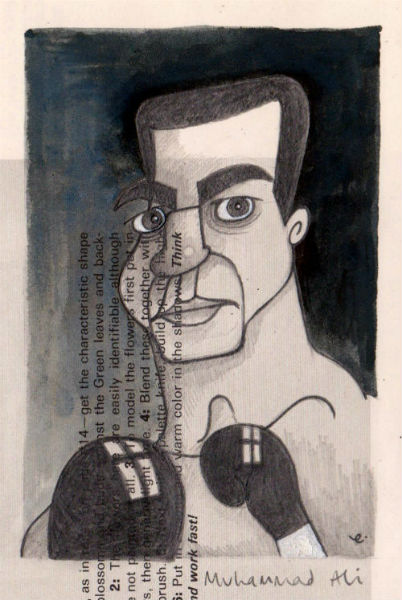
Muhammad Ali, 1942-2016

Muhammad Ali left us today, in as far as he ever can.

Cassius Marcellus Clay Jr. was just a boxer. A boxer in the same way, perhaps, that Pelé was just a footballer, but just a boxer all the same. Muhammad Ali, however, was a politician, a poet, a wit, a diplomat, a contrarian, a storyteller, a peace campaigner, a husband, a father, a religious advocate, a motivational speaker, a pillar of the civil rights movement, a television personality, a social theorist, a comedian, a villain, a hero, a martyr.

He was also twice the heavyweight boxing champion of the world. Having been stripped of the title for his social and political ideals in the turbulence of 1960s America, he regained it - aged 32 - against George Foreman in Zaire with such a breathtakingly audacious combination of brawn and brains that it walked the unseen line that divides life and death. Just under a year later, he retained the belt fighting Joe Frazier in the Philippines. Flirting with that line again,  The Thrilla In Manila was a contest of such punishing circumstances that everyone involved was pushed to the outer limits of the known human capacity for endurance: physical, emotional, spiritual.

Muhammad Ali

In the end, Muhammad Ali was a leader. Never before or since has a sporting figure so supervened their station and entered the wider public consciousness with such vitality or luminous brilliance. Ali is a hero to more than just those who follow boxing or saw him fight. Some, I'm sure, don't even know he was a fighter. After a time, it became incidental anyway. Muhammad Ali went beyond labels, beyond time and place.

Muhammad Ali gave people hopes and dreams; his foibles, mistakes and indiscretions serving only to make us feel better about those of our own. To come across Ali's story is to be moved, thrilled, excited. It is energising in a way that speaks to the human spirit at a most fundamental level.

His story will be discussed for as long as human beings are. The words "The Greatest" will never be far away, drawn magnetically towards one another. It was Clay - the boxer - who first immodestly bestowed himself with the moniker. In later years, Ali would admit he had done so without even realising yet that he was. Nevertheless, it was prescient in the extreme: Ali's life continued along a path of transcendence as if, at times, guided by an unseen hand.

Those of us today, living on in his wake, are blessed and cursed. Cursed because we are too close to properly appreciate Muhammad Ali with anything like the true perspective that his life, his achievements, his personality, his essence, will ultimately demand. It may take tens, or hundreds, of years for that to be possible. But we are blessed, too: no-one else in human history will be able to boast that they had shared a planet with him, had the opportunity to see their lives directly impacted or influenced by his in real time.

Muhammad Ali was bigger than boxing, bigger than sport. His was the ineffable spark of humanity. This was as good as it gets. He is the greatest.

Friday, 6 May 2016

Sport by Numbers: Number 15

Today's notable sporting integer is 15. Fifteen is the first number, counting from one, which is not immediately associated with handfuls of notable sporting heroes. Why should this be? I have absolutely no idea, as it seems to me to be a perfectly serviceable number . Anyone wearing it would no doubt look very handsome and make their grandmother enormously proud.

It is the number that is always worn by the full back in rugby union however, so there is no shortage of competition for our purposes: even if they haven't strictly chosen it for themselves. I like to think that if they could have, they would.

As such, I have picked one of the most notable rugby full backs ever to play the game, a legend of the sport in the British Isles: former Scotland captain and six-time British and Irish Lion, Gavin Hastings. Hastings also played 61 tests for Scotland and, with a combined 733 points, he is the all-time British rugby union top scorer.

Gavin Hastings

Friday, 29 April 2016

Sport by Numbers: Number 3

Today's sporting number comes from the hotly contested series from one to fifteen. These are the numbers that cover the action for all but the most lunatic of sporting occasions and, as a result, have come to be associated with all kinds of different personalities and disciplines. Number 3 is the number that AC Milan retired in honour of their stalwart defender Paolo Maldini; it is also the number carried by the legendary Dale Earnhardt throughout his career in stock car racing.

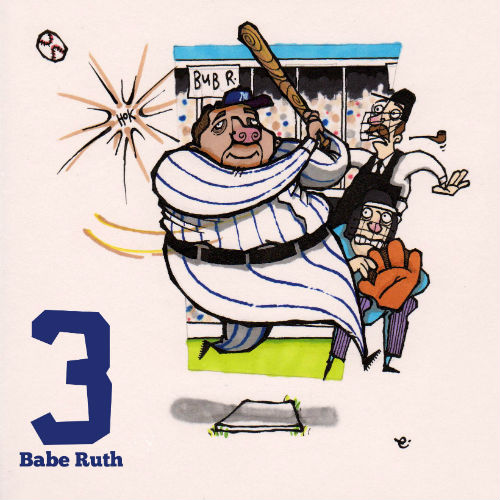
However, it would have been remiss of me to not award my number 3 to the Sultan of Swat. The 20th Century saw the invention of many things that we now accept as facts of life without really thinking about them and one of these was international sporting superstars. George Herman "Babe" Ruth was one of the first and, over a century on from his Major League Baseball debut, he remains one of the biggest. If he hadn't been born, someone would have had to invent him.

George Herman "Babe" Ruth 1895-1948

Friday, 22 April 2016

Sport by Numbers: Number 33

Today begins a new series of pictures combining sport and the iconic numbers associated with some of its greatest practitioners. I'll be trying to add a new one every Friday morning, but you know what I'm like. Flaky.

Keen-eyed viewers will also notice that I am not doing them in any kind of order, least of all numerical order. This is a deliberate strategem on my part to make the project seem like more fun and less like a self-imposed prison. Where, of course, the gaoler is me and the terms are fairly lenient. Flaky, you see.

Anyway, the first entrant is probably best known to British people as the co-pilot in the 1980 disaster comedy film Airplane! but the majority of Americans recognise him instead as perhaps the greatest basketball player of all time, Kareem Abdul-Jabbar. Virtually every other rival he has for that title is also on my list awaiting being drawn by the way, so don't panic too much.

He is also an excellent reminder that US sporting greats can appear in motion pictures and not subsequently murder their wife.

Number 33: Kareem Abdul-Jabbar

Tuesday, 12 April 2016

Disaster Film Olympiad: Countdown To Looking Glass

Countdown To Looking Glass is an unlikely name for a film but it has a similarly unlikely premise: financial instability caused by a banking collapse suddenly intensifies the significance of a regional dispute in the Middle East, one that quickly descends into a proxy war between the Soviet Union and NATO forces which threatens to spill over into a global conflagration. None of this could ever happen.

As the new Soviet-backed, some say puppet, regime get down to business in Oman, the Western news media swing into action to help placate and inform the viewing trillions. The responsible souls of the major news outlets understand the significance of their role and would never dream of trying to spread panic or propaganda. They are our true heroes.

The disaster movie-as-faux-real-time-news-coverage is not an unusual concept, nor did it begin with Countdown To Looking Glass - 1983's Special Bulletin is a notable earlier example. However, Countdown has a few interesting twists and tweaks to the format designed to keep things fresh and interesting. Firstly, they engage the services of real life contributors: veteran American TV news stalwarts Eric Sevareid and Nancy Dickerson both appear as themselves as a senior analyst and senior reporter respectively. Additional opinion is provided by US Senator (and five-time former Presidential candidate) Eugene McCarthy, defence analyst Lincoln Bloomfield and Congressman (and all-round right wing diarrhoea cannon) Newt Gingrich. Although it is perhaps debatable as to the exact degree which each of the above understood what was actually going on, it nevertheless adds an interesting vérité to proceedings.

Patrick Watson and Newt Gingrich in Countdown To Looking Glass (1984)
Don Tobin reports in Countdown To Looking Glass, shortly before kissing his ass goodbye

The second change to the format is that the real time news coverage is broken up by portions of melodrama, dealing with the real lives of both the lead anchor Don Tobin (played by Canadian news veteran Patrick Watson) and Washington reporter Dorian Waldorf (Helen Shaver). We watch on day by day as an increasingly anxious Tobin yaks on to his wife about the likely outcome of the unfolding crisis and, more significantly for the story, we see Waldorf's romantic relationship with a White House staffer lead to exclusives, high anxiety and heartbreak. Having gone to the trouble of getting real world contributors to weigh in on an entirely fictional story, these soap opera-style interludes could have been an eccentric move on the part of the producers. But oddly, it works: Shaver's story in particular has some very interesting and incisive points to make about the way that news events and the news media have become so interdependent as to have become self-sustaining; the exclusive story she uncovers from inside the Oval Office seems to have the potential to help defuse the spiralling situation only to be held back by the station's editorial policy.

It's all so grindingly predictable. This would ordinarily make for a damning condemnation of any film, but in this case it is not: the unfolding news coverage portions of the piece are done well enough that any despondency you feel tends to be despondency at the worst excesses of global politics and its vainglorious pride, its high ideals at the expense of the lives of its people. Sobering stuff, not least when - on the cusp of a nuclear exchange in the Strait of Hormuz - Newt Gingrich justifies the action as being crucial to the United States' vital stewardship of freedom and democracy around the world. Gallingly, this is something which required no acting talent at all on the Congressman's part because it also happens to be what Gingrich (in company with all of his contemporaries on the right of American politics) really thinks. Thanks, America.

Countdown To Looking Glass gets a spine tingling EIGHT out of ten Disaster Points.

Wednesday, 30 March 2016

The Five Greatest Sports Stars of the 20th Century

Last year I made five drawings of the five people who I consider to be the greatest sports stars of the 20th Century and with typical efficiency I am only now doing anything with them. I love sport more than anything else, I think. Like great music or art, it transcends human experience with a potency far outreaching its remit. But, unlike music or art, it retains a crucial element of total objectivity. There are winners and losers in sport; for all the discussion and for all the postulation there will always come a time when all the bullshit must, through absolute necessity, stop. It is this which appeals to me on such a fundamental level. Elemental, even. I need it.

Choosing five outstanding people from the sporting field is foolhardy in the extreme and invariably shot through with bias, blind spots and flaws. Complaints to the usual place, perhaps. Or, even better, how about making your own list? Creative solutions to internet-based disagreement is surely the way forward. For my choices, I tried to pick five people whose greatness went beyond their particular field of endeavour. They are people who made a wider social impact, through their values, their example or their personality.

I consider them to be five of the most inspirational people the Twentieth Century produced.

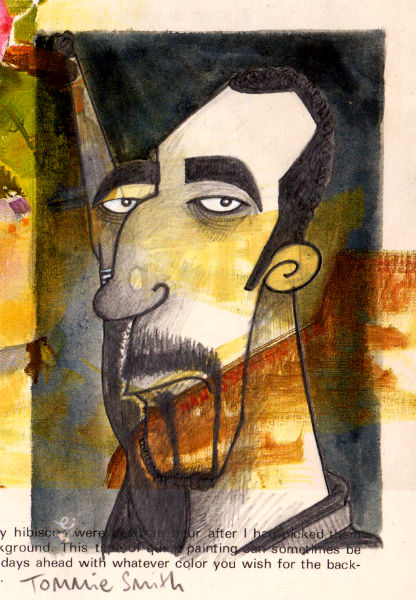
5. Tommie Smith (1944-) - Athletics

Tommie Smith

Tommie Smith crystallised an entire movement in one single perfect moment. On 16th October 1968 at the Mexico City Olympics, he won the 200 metres sprint in 19.83 seconds. It was an heroic enough performance as it stood: he had been nursing a hamstring injury through the heats and his display in the final was astonishing, the first time that 200 metres had been officially run in under twenty seconds in human history.

Quite rightly, however, Smith is better remembered for what he did on the podium. 1968 had been a year of tumult. In his homeland, it had seen the assassination of Martin Luther King and Robert Kennedy and the worsening of the conflict in Vietnam. The Civil Rights struggle was far too deeply ingrained to be solved simply by recourse to legislature and racial tension remained a tinderbox across the United States. As for the rest of the world, similar life-and-death struggles for recognition, for freedom and for human rights also raged: Northern Ireland, Warsaw, The Prague Spring, student uprisings in France and West Germany; the continuing stain of Apartheid in South Africa, as well as continuing tension in Israel and Palestine.

Tommie Smith's black gloved raised fist salute was seen as being a symbol of black power and association with the nascent Black Panther movement. In truth, it represented support for everything that is good and just in a year that had, at times, looked set to spiral out of control. Even if in the moment he, silver medallist Peter Norman of Australia and Smith's American teammate John Carlos may have not realised what an epochal gesture they had made, nearly 50 years on it remains the single most staggeringly eloquent reminder of sport's social potency.

Of course, Smith's reward was to be canned. Both he and Carlos were immediately sent home from the Olympics and made pariah by a significant proportion of American society. The following year, Smith moved into American Football, playing two games for the Cincinnati Bengals before becoming both a sociology teacher and an athletics coach at Oberlin College, Ohio.

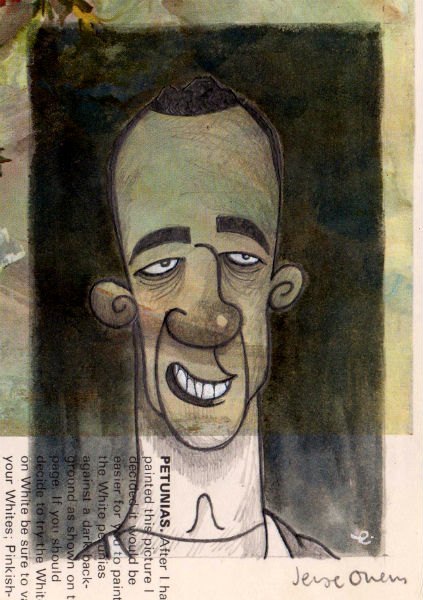
4. Jesse Owens (1913-1980) - Athletics

Jesse Owens

Jesse Owens was one of the greatest track athletes in history. During the 1935 Big Ten athletics meeting at Ann Arbor, Michigan, he broke three world records within 45 minutes. The following year, he won four gold medals in the 100 metre sprint, 200 metre sprint, 4x100 metre sprint relay and long jump at the Berlin Olympics.

Owens never set out to be a hero or a warrior for social justice. Both things just sort of caught up with him, even when nothing else could. He remains the ultimate fly in the ointment, the most celebrated up yours to the most insidious and evil political regime of modern human history. Adolf Hitler had, of course, designed the Berlin Olympics to be as carefully choreographed a love letter to the innate superiority of his Aryan supermen as any sporting event could be. But he had not reckoned on the basic truth of the forces at work in the sporting arena. 1936 was Owens' time and he would not be - could not have been - denied.

Much has been made of the Fuhrer's avoidance of Owens following his Olympic success. Debate still continues as to whether or not this was the result of prior engagements, a desire to not be caught out in an impending rainstorm or his virulent racism. The possibility even remains that the Nazi leader did seek out and congratulate Owens but that it was subsequently hushed up. The fact remains that Owens' feats were all featured in Leni Reifenstahl's state-funded 1938 film of the event, Olympia, whilst at home he remained a second-class citizen. It is this frequently ignored story which speaks with the greatest volume about the legacy of Jesse Owens, a campaigner for civil rights and social justice. He always maintained that it was not Hitler who snubbed him but his own President. "[He] didn't even send a telegram".

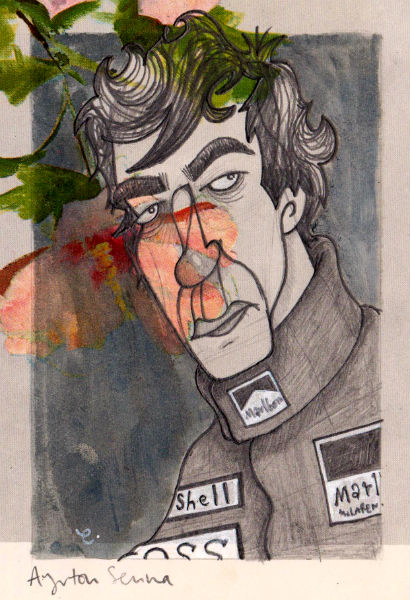
3. Ayrton Senna (1960-1994) - Motor racing

Ayrton Senna

Ayrton Senna was the fastest racing driver who has ever lived. He drove like the devil was after him and he was trying to get away. And as fanciful a narrative as that sounds, the man himself would leave you in some doubt as to whether or not it was what was at stake. There are few people possessed of the kind of single-minded dedication, control and ability to achieve all that Senna did in his brief life, fewer still able to articulate it in quite the same mesmerising way that he did: all the more remarkable if you consider that he was often doing so in a second language.

The winner of 41 Grands Prix, three Formula 1 World Championships and 65 pole positions - the latter a record that it took even Michael Schumacher nearly a hundred additional career races to overhaul - Senna's numbers remain impressive but, as is the nature of many statistics, are slowly being subsumed by history. What will not go away is the story. Senna's electrifying presence transfixed the motor racing world; Formula 1 was Ayrton Senna and to set out to conquer it meant beating him. What will never go away is the footage. Some of it shows him doing things which are devious, questionable or downright reprehensible, all reminders of the fundamental flaws that reside within human beings. These were foes to overcome all as real as Alain Prost, Nelson Piquet, Nigel Mansell or Michael Schumacher. What will never go away is the sight of a man propelling a racing car along at a speed at which his rivals were either unable or unwilling to match.

Senna was a remarkable man. Born of considerable privilege and wealth, he nevertheless remains nothing less than a hero to millions of his disenfranchised and poverty stricken Brazilian countrymen. Clearly flawed and prone to behaviour on track so nefarious it could probably have been tried in a court of law, he remains a hero to every journalist and motorsport fan, one whose legacy grows with each passing year. Had he survived the crash in the 1994 San Marino Grand Prix which claimed him, he could well have been the President of Brazil by now. Or of the United Nations. He may even have been able to swing Pope. To assume anything less of Ayrton Senna always was to be confounded by him.

2. Billie Jean King (1943-) - Tennis

Billie Jean King

So much of the story of Twentieth Century sport, as with its history, is entangled with the story of race that it is easy to forget that the battle for equality was never just confined to the colour of a person's skin. Women's rights and LGBT rights were - are - just as defining and active a social battleground. Billie Jean King was a pioneer, a leader and a spokeswoman; a brilliant competitor who could have made all her most telling points on the court but chose to speak out off it as well. Moreover, she still is and still does all of these things.

Much is made of her participation in the famous Battle Of The Sexes tennis match, an event between the top female player of the day and Bobby Riggs, the 1939 Wimbledon singles champion who, at 55-years old believed he was still the match of any modern female player. King disabused him of this notion, defeating him comfortably 6-4, 6-3, 6-3. But in reality this was just a spectacle for the television and a silly old fool getting his comeuppance. Billie Jean King is better remembered for the way she lived her life day to day, a fact summed up by her belief that her most famous match's key virtue was getting people interested and enthused about the sport of tennis.

As a player she was an indefatigable competitor. Combined with a longevity rare in such a high impact sport - her career spanned four decades and lasted 24 years - it makes the case for her inclusion on any list of sporting greats on a statistical basis alone. What truly sets King apart for me is her bravery. It takes considerable courage to choose to continually put your head above the parapet because it is the right thing to do, especially when you are successfully operating in an arena which would make anyone quite able to happily and quietly feather their nest ready for a peaceful retirement. King refused to stand down; on the issue of professionalism in tennis, on the issue of equality for women, or on the issue of the acceptance of homosexuals into society. To this day, if Billie Jean speaks openly on any subject, we had better all be listening.

1. Muhammad Ali (1942-) - Boxing

Muhammad Ali

Muhammad Ali is the greatest. We have no excuse for this coming as a surprise as he has been telling us all for decades. It is perhaps to his greatest credit that the scale of his achievement - as a sportsman and as a human being - was such that it was nevertheless still surprising.

No other sporting figure has ever blurred so many social boundaries. He was both of our time and for all time; initially just a boxer, his extraordinary personality made him a star at a time in America where black people were supposed to know their place. Ali stood up and was counted. When this, as it inevitably would, made him enemies he stood louder and prouder. When they took away what was rightfully his he won it back in such impossibly heroic circumstances that it would be dismissed out of hand as a film treatment as simply too unbelievable.

Ali is a continual reminder to me that the search for a higher power is best attempted by looking around you. A glimpse into the eyes of Ali, even now as a frail man broken by disease and dulled by age, leaves me in no doubt as to his other-worldly power to inspire greatness in those around him. There will never be another sportsman who so unifies as many disparate sections of human society as Muhammad Ali. The greatest tribute of all is that, principle among the reasons for this is that Ali existed in the first place.

The five pictures that illustrate this piece are available to buy for £25 each, or £125 for the full set (including Pelé, who didn't make the cut). If you are interested, drop me a message on Facebook or send me an email.

Tuesday, 29 March 2016

Disaster Film Olympiad - Volcano

Los Angeles is a fascinating place. Most of the turbulence that afflicts the city is social - gang violence, racial tension, pro-footballers murdering their wives and getting away with it, etc. - but the potential for far a more elemental catastrophe lurks under every crib, pimp wagon or Ben Affleck's house. The San Andreas fault is responsible, the meeting of the Pacific and North American continental tectonic plates. It makes coastal California ripe earthquake territory and when they strike, they tend to be the sort of earthquakes that do more than rearrange your gnomes.

Of course, Los Angeles is also the home to the American film industry and there is nothing Hollywood enjoys more than occasionally reminding itself that it could at any moment be naught but a smoking crater in the ground, just like Kevin Smith's house. It's all part of that particular deal with the devil that movie stars make with their conscience as the man arrives with the next lorry load of money.

Volcano was released in 1997, part of the brief pre-millennium disaster film renaissance which also saw us clenching our buttocks through Dante's Peak, Twister, Armageddon and Deep Impact. Also notable to anyone who might perhaps be endlessly watching disaster films for no real reason is that the director was Mick Jackson, the Briton who made Threads. Fortunately, Volcano is nowhere near as brutal. Although I don't live in Los Angeles, so maybe it is. The fact that John Travolta potentially considers Volcano to be more frightening than Threads is the take home portion from this paragraph.

Anyway, the earthquake that I had been warning everybody could happen in Los Angeles happens. Our hero, Mike Roark of the city's Emergency Management Committee, puts aside his much-needed family holiday to make sure nothing dreadful has happened: one of the Os in the Hollywood sign may have fallen over, for instance, or Warren Beatty's toilet might be leaking. His decision has long-reaching consequences for some of the city engineering workers, who are cooked to death while inspecting a storm drain. This is an unlikely thing to happen, but Roark takes it in his stride. Roark is an easy man to have sympathy towards. He's middle-aged and craggly, gruff and curt yet possessed of an undeniable twinkly oaky Southern charm. He is a bit like Tommy Lee Jones, so the film's casting director secured something of a coup when they acquired the services of Tommy Lee Jones to essay the role.

Tommy Lee Jones in Volcano (1997)

The itch in Roark's knickers is Dr. Amy Barnes, a geologist. Being a geologist is comfortably one of the most genuinely perilous jobs that one can have while still being excruciatingly boring conversation at a dinner party, a dichotomy which tends to make them peculiarly strident people. Barnes is convinced that the earthquake has caused the formation of a volcano right under the centre of the city. Roark is sympathetic to these concerns, but he can't just start throwing tax payers' money around without evidence. Evidence that Barnes, to her own frustration and no doubt that of the people who have to talk to her at her friends' dinner parties, is unable to gather.

Fortunately, Barnes has a key ally in her quest: Mother Nature. The volcano that she had been predicting to everyone could volcano erupts right under the La Brea tar pits, causing hundreds of dollars worth of damage to the fibreglass mammoths and also pumping boiling lava all over the place. Wilshire Boulevard, traditionally given over to being the main arterial road for the largest city in California, becomes a regular shit show of burning vehicles, stuck underground trains and fifth degree burns. It's a lawsuit waiting to happen. To her credit, Dr. Barnes continues to work for the good of the Angelenos, where most of us would take to the highest vantage point immediately available and look smug.

There are two ways that this sort of film can go: they either deal with a pre-existing adversarial relationship being reconciled in the crucible of extreme circumstance, or the nascent union between two people being thrown together by events. Volcano is the latter and if the sex is as impressive as Roark and Barnes' teamwork, there may yet be further earth tremors in southern California. Using carefully placed detonations of explosive devices, they manage to channel the lava flow through the city's network of subterranean tunnels and into the Pacific Ocean where it would presumably solidify and form a place even drier, hotter and more exclusive than Los Angeles itself, much to the chagrin of the Hollywood elite.

I don't know enough about volcanology to know whether any of this exotic bill of fayre is likely or even possible, but I know enough about disaster films to say that this is a perfectly serviceable one. It ticks all of the traditional generic boxes - relationships are explored and developed, people are roasted to a crisp and the special effects department get to just go nuts - as well as retaining its own personal charm. Volcano gets SIX out of ten Disaster Points.

Thursday, 10 March 2016

Disaster Film Olympiad: The Day The Earth Caught Fire

There are two things of which simply no good can ever possibly come: nuclear weapons and the international dateline. When they combine, the overall effect is inevitably catastrophic for all in its path. Unfortunately, these were the precise confluence of circumstances that were to assail the hard-working staff at the offices of The Daily Express in 1961, on a day... THE EARTH CAUGHT FIRE!

For years, man has yearned to destroy the Sun...

Typical tabloid hyperbole, that. The Earth did not literally catch fire, but it was nevertheless sickening for something pretty serious. The Day The Earth Caught Fire is an entertaining and considered Cold War fable that warns that the dangers of nuclear weapons - or not checking your calendar - stretch far beyond the obvious. The United States and the Soviet Union, now both building the spiffiest, most powerful hydrogen bombs that modern technology can muster, somehow contrive to each test them simultaneously on opposite ends of the globe without having first checked to see how time zones work. The overall effect throws the Earth off of its normal orbit and into an inevitable collision course with the Sun.

This annoys everybody. The new jaunty tilt of our celestial home causes havoc with the seasons, as drought, heatwaves, storms and floods beset countries quite unprepared to deal with the consequences. The action centres on the newspaper offices of central London, where to call the weather all to cock would barely do the situation justice. The temperature soars, causing a catastrophic drought, ruinously damaging thunderstorms and freak fogs. To be honest, it's pretty similar to what the weather is like in the 21st Century, although it is best to put that thought to the back of your mind since the upshot of all this is: we're doomed. The hardworking Daily Express staffers - motivated by the possibility of a worldwide scoop and powered only by cynicism, lukewarm Coca Cola and a bar tab that looks like Jeremy Hunt's parliamentary expenses claim - do their best to get to the bottom of the story, even though it turns their newspaper into a shrill, weather-obsessed, catastrophe rag. Which obviously could never happen.

It is an unusual disaster film, but it doesn't suffer at all for it: the main characters are reactive, rather than active; resigned rather than rallying. The film neatly captures the constrictive inevitability of a society that has contrived to destroy itself as we all feared it would. There are no heroes, just people being people. Some bad, some mad, but mostly good-hearted. Of course, a film is still always only a film, so a few compromises have to be made: of course our leading man Peter Stenning would take this opportunity to begin a torrid romantic entanglement with Jeannie Craig, a secretary from the Met Office. And naturally he will end up defending her honour from a bunch of feral beatnik water terrorists by engaging in fisticuffs in her apartment. These are things that happen in every film, no matter what the genre or the stakes.

On the whole, however, it is an absorbing and entertaining way to spend 90 minutes. Well, entertaining when one considers the oddly prescient nature of the subject matter: as I watched the film the sky outside was purple and the hail was falling upwards. Particularly pleasing is its ambiguous ending, as the dual forces of science and irony combine to decide the only way to save Earth from a certain fiery demise is to right its place in the heavens with... more atomic blasts. What will happen? The church bell ringers will be putting in for double overtime, if nothing else. It's hard enough ringing bells in normal temperatures and when adequately hydrated. More important still is that I have successfully managed to write the first ever retrospective review of The Day The Earth Caught Fire that doesn't mention it features a pre-super duper super stardom Michael Caine, playing a copper.

Daily Express journalist Peter Stenning (Edward Judd) in The Day The Earth Caught Fire: what would Princess Diana do?

More worthy of note even than the revelation that Michael Caine has to eat food and pay his gas bill are the special effects. Considering the technological limitations of the time they stand up very well indeed. Particularly stunning are the vistas of London as a sun-bleached, dried out and abandoned husk - all made by the matte painting mastery of Les Bowie. Film making has become less of an art since computers came along, in many ways. Sigh.

The Day The Earth Caught Fire gets a smouldering EIGHT out of 10 Disaster Points.

Attention

You have reached the bottom of the internet